Furlough Meaning: What Does Furlough Mean?
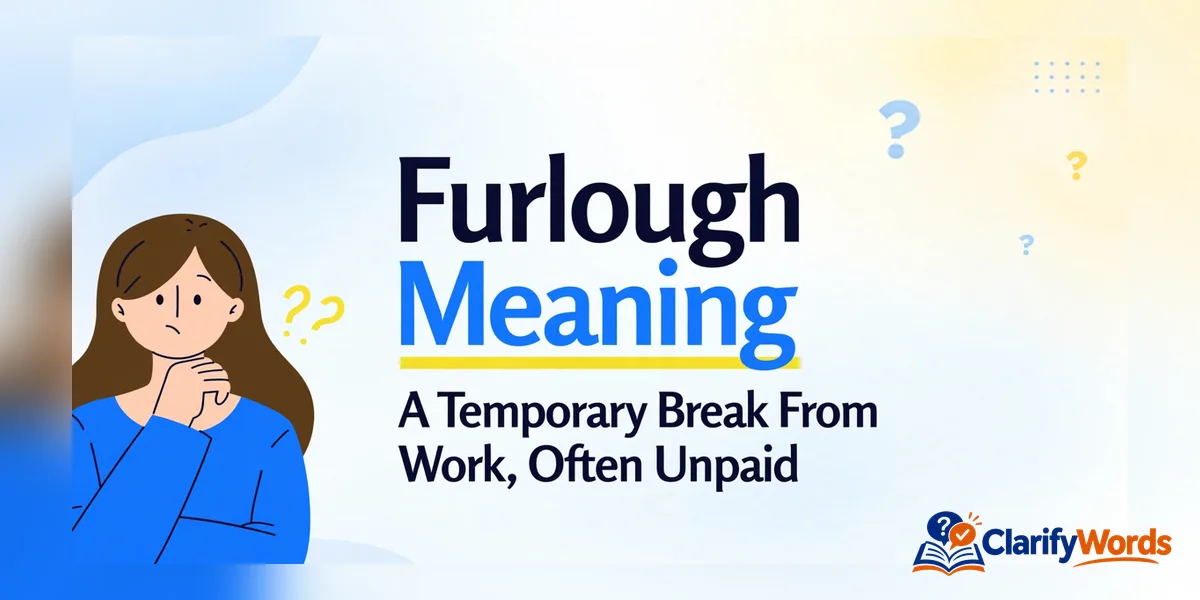
A furlough can affect your work, income, and benefits. But does it mean you have lost your job? Not necessarily.
The furlough meaning is a temporary period when an employee must stop working, often without pay. The employee generally remains employed during this time. Employers may use furloughs when business slows or funding becomes limited.
The word also has military and prison-related meanings. This guide explains each meaning, shows how furlough differs from a layoff, and answers common questions about pay and benefits.
Quick Answer: What Does Furlough Mean?
A furlough is a temporary break from work, usually because an employer has limited work or money. Employees often do not receive pay for furlough days. However, their employment generally continues.
For example, a company might furlough workers for two weeks during a slow season. Those workers may return when business improves.
Table of Contents
- Furlough Meaning at a Glance
- What Does Furlough Mean in Simple Words?
- Does Furlough Mean You Are Fired?
- Furlough vs. Layoff vs. Vacation vs. Suspension
- How Does a Furlough Work?
- Do You Get Paid or Keep Benefits During a Furlough?
- What Does Furlough Mean During a Government Shutdown?
- Other Meanings of Furlough
- How Do You Pronounce Furlough?
- Is Furlough a Noun or a Verb?
- What Is the Origin of the Word Furlough?
- Memory Trick: How to Remember Furlough
- Practice Questions: Test Your Understanding
- Frequently Asked Questions
Furlough Meaning at a Glance
| Detail | Answer |
|---|---|
| Simple meaning | A temporary break from work, often unpaid |
| Part of speech | Noun and verb |
| Pronunciation | FUR-low, with a silent gh |
| Usually paid? | Often no |
| Is the job kept? | Generally yes |
| Main use today | Workplace leave during slow business or funding gaps |
| Origin | Dutch verlof, meaning permission or leave |
The table gives you the short version of the furlough meaning. The sections below explain each part in more detail.
What Does Furlough Mean in Simple Words?
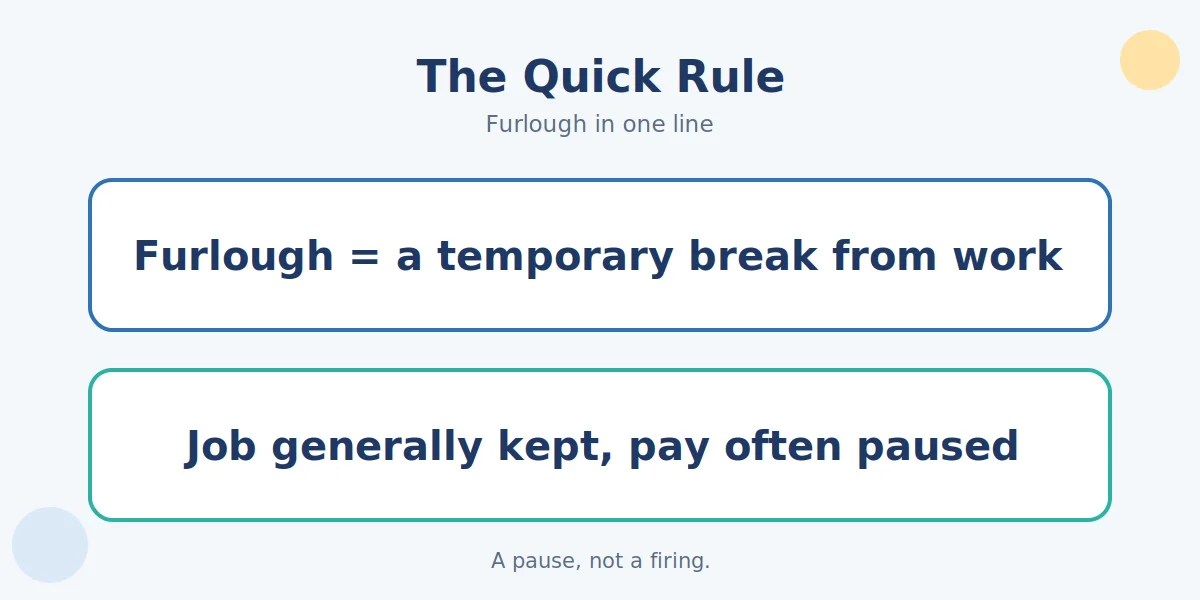
In simple terms, the furlough meaning is this: an employer temporarily tells workers not to work. It often happens when a business faces financial problems, reduced demand, or limited funding.
A furlough usually differs from losing your job. Your employer generally keeps you on the payroll as an employee. However, you may not receive wages during the furlough period.
Example: A factory has fewer orders than usual. The manager furloughs some employees for one week. They remain employees and may return when production increases.
Merriam-Webster, Dictionary.com, and Oxford describe furlough as a period of leave or temporary time away from work. The exact meaning depends on the situation.
Does Furlough Mean You Are Fired?
No. Being furloughed does not automatically mean you are fired.
A furloughed employee generally remains employed but temporarily stops working. A fired employee, by contrast, loses their job.
For example, imagine your company announces a three-week furlough. Your manager says you should return when the period ends. You have not necessarily lost your position.
However, a furlough does not guarantee that your job will continue forever. Business conditions may change, and an employer could later make other staffing decisions.
Always read your employer’s notice. It should explain your status, expected return date, and any conditions.
Furlough vs. Layoff vs. Vacation vs. Suspension
These four terms describe different reasons for being away from work. They are not interchangeable.
| Term | Meaning | Is employment continuing? | Is it usually paid? |
|---|---|---|---|
| Furlough | Temporary time away from work, often due to limited work or funds | Generally yes | Often unpaid |
| Layoff | Job loss or temporary removal because an employer needs fewer workers | It depends on the arrangement | Usually no regular wages |
| Vacation | Approved time off for personal rest or travel | Yes | Often paid |
| Suspension | Temporary removal from work, sometimes for disciplinary or administrative reasons | Usually yes | Depends on the situation |
Furlough vs. Layoff
A furlough generally means a temporary work break. A layoff means an employer reduces its workforce or removes a position. Some layoffs are temporary, while others are permanent.
Furlough vs. Vacation
A vacation is planned time off for personal reasons. A furlough usually happens because the employer has limited work or funding. Vacation time is often paid, while furlough time may be unpaid.
Furlough vs. Suspension
A suspension removes someone from work for a period. It may follow a workplace investigation or disciplinary issue. A furlough usually relates to business needs or funding, not employee conduct.
How Does a Furlough Work?
The process depends on the employer and the reason for the furlough. A company may announce specific dates or reduce employees’ working hours.
For example, an employer might:
- Tell employees that a furlough is necessary.
- Explain which workers or departments are affected.
- Share the expected dates and return instructions.
- Explain how pay, benefits, and leave may change.
- Contact employees when normal work can resume.
Some furloughs involve full days away from work. Others involve fewer working days each week.
Example: A restaurant closes on Mondays to reduce costs. Its staff work fewer days until business improves. In short, the furlough meaning in practice is a pause set by the employer.
Do You Get Paid or Keep Benefits During a Furlough?
Pay and benefits during a furlough depend on the employer, employment agreement, and applicable rules. Do not assume every furlough works the same way.
Do You Get Paid During a Furlough?
Many employer furloughs involve unpaid time away from work. However, pay rules can depend on your job classification and the time you actually work.
The U.S. Department of Labor explains how federal wage rules apply to furloughs. For example, covered nonexempt employees generally must receive minimum wage and overtime pay for hours worked.
Rules for certain salaried exempt employees can differ. Employers should review the applicable requirements before making pay deductions.
What Happens to Your Benefits?
Your health insurance and other benefits may continue during a furlough. However, the details depend on your employer’s policies and benefit plan.
Some employers may continue coverage while collecting missed premium payments later. Others may have different rules for employees in unpaid status.
Federal employees have specific benefit rules. The Office of Personnel Management, or OPM, explains how nonpay status affects federal health and life insurance.
Check your benefits documents or contact human resources. Ask about insurance premiums, retirement contributions, paid leave, and other coverage.
What Does Furlough Mean During a Government Shutdown?
During a federal government shutdown, a furlough can happen when an agency lacks approved funding.
OPM defines a shutdown furlough as a temporary nonduty, nonpay status. In other words, affected employees generally stop working and do not receive pay during that period.
Federal employees may have different work statuses:
- Furloughed employees: They generally stop performing their regular duties during the shutdown.
- Excepted employees: They continue working because their duties are legally allowed or required during the funding lapse.
A government shutdown furlough is not the same as a permanent job loss. However, employees should follow their agency’s instructions.
Pay and benefits questions can be complicated. Do not assume every employee receives the same treatment. Check OPM and your agency for current guidance.
Other Meanings of Furlough
The word furlough does not only describe workplace leave. It also has military and prison-related meanings.
Military Furlough
In military use, a furlough means approved leave from duty for a limited period.
Example: A soldier receives a two-week furlough to visit family.
Oxford and Dictionary.com include this meaning in their dictionary entries.
Prisoner Furlough
A prisoner furlough is temporary permission for an incarcerated person to leave prison. It may allow a person to attend a specific event or take part in an approved program.
Example: A prisoner receives a weekend furlough to visit family.
This use does not mean the person’s sentence has ended.
How Do You Pronounce Furlough?
Cambridge Dictionary gives the American pronunciation as FUR-low. The word has two syllables, with stress on the first.
In the US, say /ˈfɝː.loʊ/. In the UK, say /ˈfɜː.ləʊ/.
The letters gh are silent. They do not make an extra sound.
Remember the first syllable sounds like “fur.” The second sounds like “low.”
Is Furlough a Noun or a Verb?
Furlough can work as both a noun and a verb.
As a noun, it describes the period of leave or temporary time away. As a verb, it means to place someone on furlough.
| Word form | Meaning | Example |
|---|---|---|
| Furlough | Noun or base verb | The company announced a furlough. |
| Furloughs | Plural noun or present-tense verb | The company furloughs workers in winter. |
| Furloughed | Past tense or past participle | The company furloughed 20 employees. |
| Furloughing | Present participle | The employer is furloughing some staff. |
Example sentences:
- Noun: The employee began a two-week furlough.
- Verb: The company may furlough workers next month.
- Past tense: The agency furloughed several employees.
- Present participle: The business is furloughing staff to reduce costs.
For another guide to word meanings, explore our Discernment Meaning guide.
What Is the Origin of the Word Furlough?
The word furlough comes from the Dutch word verlof, meaning permission or leave.
It entered English in the early 1600s. Its early use referred mainly to leave from military duty.
Over time, the word gained its workplace meaning. Today, people often use it when employers temporarily send workers home.
Memory Trick: How to Remember Furlough
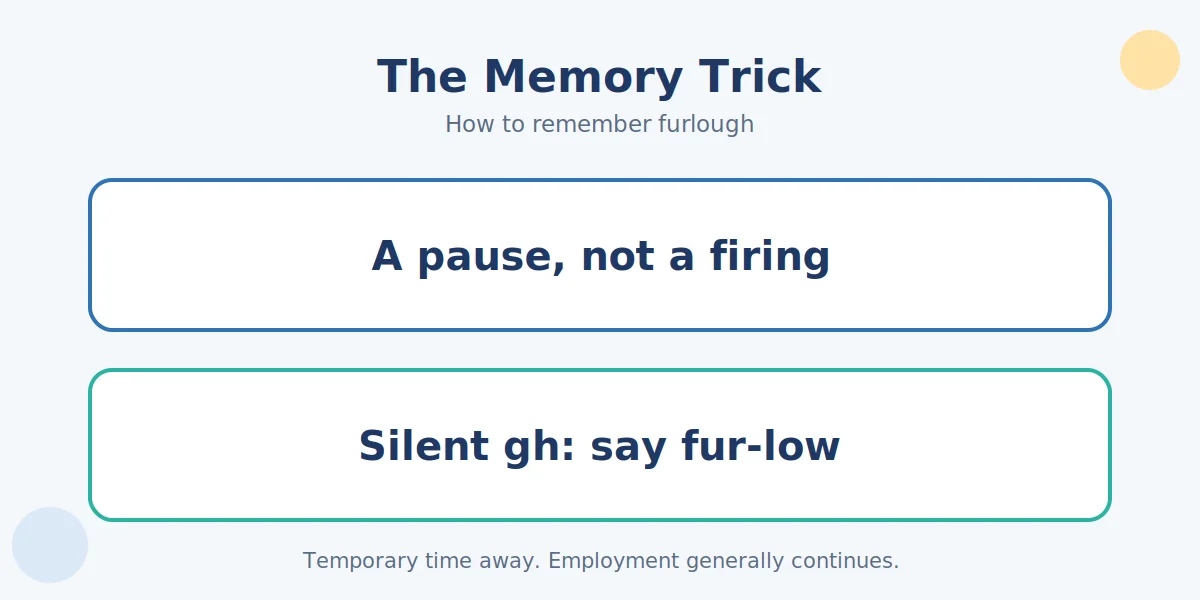
Think of furlough as a temporary pause from work.
A furloughed employee is usually still employed but takes time away from regular duties. Remember this simple idea: the furlough meaning is a temporary break, not automatically a job loss.
Practice Questions: Test Your Understanding
Check what you have learned with these 10 questions. They cover basic meanings, comparisons, and common mistakes.
Beginner Questions
- What does furlough usually mean in a workplace?
- A. A permanent promotion
- B. Temporary time away from work
- C. A paid vacation
- D. A new job
- Does a furloughed employee generally remain employed?
- A. Yes
- B. No
- C. Only after retirement
- D. Never
- Which word describes approved personal time off?
- A. Layoff
- B. Suspension
- C. Vacation
- D. Termination
Intermediate Questions
- Why might a company furlough employees?
- A. To celebrate a promotion
- B. Because it has limited work or funding
- C. To increase vacation days
- D. To change its company name
- What does a furlough mean during a government shutdown?
- A. Permanent dismissal
- B. Temporary nonduty, nonpay status
- C. Automatic retirement
- D. A paid vacation for everyone
- Which statement about furlough pay is most accurate?
- A. Every furlough is paid.
- B. No furlough can include pay.
- C. Pay depends on the circumstances and applicable rules.
- D. Employers never have to pay for hours worked.
- Which is another meaning of furlough?
- A. A military leave of absence
- B. A salary increase
- C. A job interview
- D. A work promotion
Correct-the-Mistake Questions
- Correct this sentence: “A furlough always means an employee has been fired.”
- Correct this sentence: “The company vacationed 15 workers because it had no funding.”
- Correct this sentence: “The agency furloughing several employees last month.”
Answer Key
| Question | Correct answer | Explanation |
|---|---|---|
| 1 | B | A workplace furlough is temporary time away from work. |
| 2 | A | Employment generally continues during a furlough. |
| 3 | C | Vacation means approved personal time off. |
| 4 | B | Employers may furlough workers when work or funding is limited. |
| 5 | B | OPM describes shutdown furlough as temporary nonduty, nonpay status. |
| 6 | C | Pay depends on the situation and applicable rules. |
| 7 | A | Furlough can also mean approved military leave. |
| 8 | A furlough does not automatically mean an employee has been fired. | Furloughs are generally temporary. |
| 9 | The company furloughed 15 workers because it had limited funding. | Furloughed is the correct verb here. |
| 10 | The agency furloughed several employees last month. | Furloughed is the correct past-tense form. |
Frequently Asked Questions About Furlough
1. What does furlough mean in simple terms?
A furlough means a temporary break from work, often because an employer has limited money or work. Employees generally remain employed, but they may not receive pay during the furlough period.
2. Does furlough mean you are fired?
No. A furlough generally means your employer temporarily stops your work. You usually remain an employee. However, a furlough does not guarantee permanent job security or a specific return date.
3. Is furlough the same as a layoff?
No. A furlough usually involves temporary time away while employment continues. A layoff involves reducing or ending a job, and it may be temporary or permanent in some cases today.
4. Do you get paid during a furlough?
Furlough days are often unpaid, but pay depends on your employer, job classification, and applicable rules. Employees who perform work may still have wage protections. Check your employer’s policy first.
5. Can you collect unemployment while on furlough?
You may qualify for unemployment benefits while furloughed, depending on your state and circumstances. Eligibility often depends on work history, wages, and other state rules. Contact your state unemployment agency.
6. How long does a furlough usually last?
There is no standard furlough length. It may last a few days, several weeks, or longer. The duration depends on the employer’s needs, available funding, and current business conditions overall.
Final Takeaway
The furlough meaning is a temporary period away from work, often without pay. It generally does not mean you have been fired. Pay, benefits, and return dates depend on the situation.
Understanding the word helps you read workplace notices and discuss employment changes clearly. Explore more definitions in our Text Meanings category.