
Ageing vs Aging: Which Spelling Is Correct?
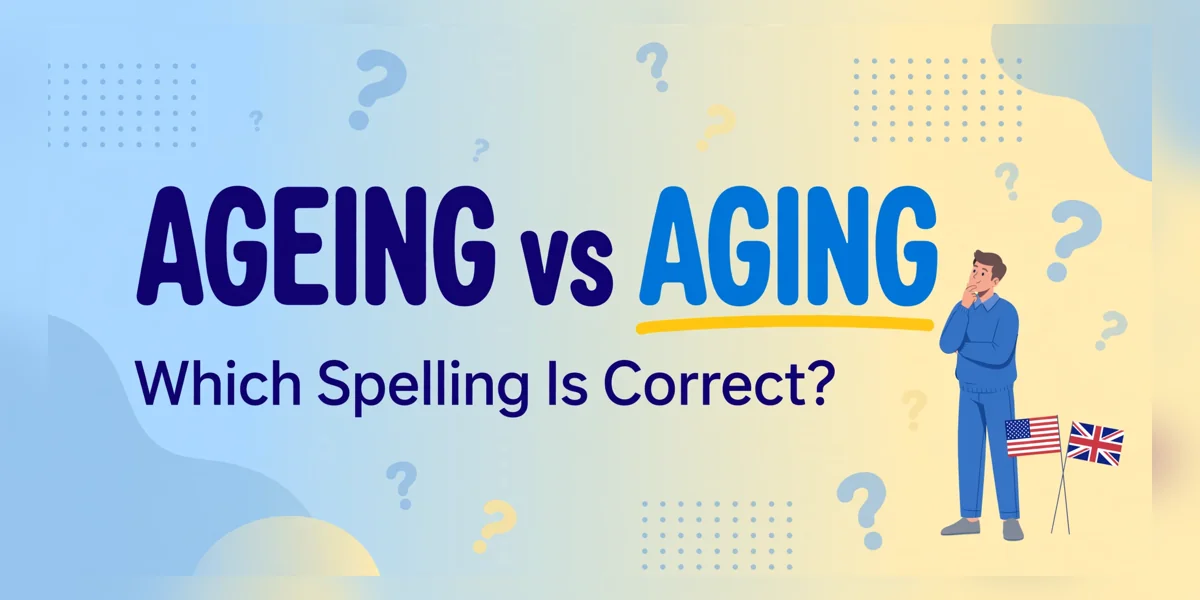
Quick answer: In American English, aging is the standard spelling. In British English, ageing is the usual form. Both words have the same meaning and pronunciation. Neither spelling is wrong when used in its own variety of English.
If you are writing for readers in the United States, choose aging. Use it consistently in schoolwork, articles, business documents, and everyday writing. This ageing vs aging guide explains the rule, the exceptions, and the best choice for your audience.
Table of Contents
- Ageing vs Aging: Quick Comparison
- What Do Aging and Ageing Mean?
- Why Does American English Use Aging?
- How Do You Pronounce Aging and Ageing?
- Aged vs Aging: What Is the Difference?
- Common Words and Phrases With Aging
- Aging vs Ageing in Different Countries
- Common Spelling Mistakes to Avoid
- How to Remember the Correct Spelling
- How to Choose Between Aging and Ageing in Your Writing
- Practice Questions
- Frequently Asked Questions
Ageing vs Aging: Quick Comparison
| Detail | Aging | Ageing |
|---|---|---|
| English variety | American English | British English |
| Meaning | Growing older or becoming worn | Growing older or becoming worn |
| Pronunciation | AY-jing | AY-jing |
| Part of speech | Noun, adjective, verb form | Noun, adjective, verb form |
| Example | The aging building needs repairs. | The ageing building needs repairs. |
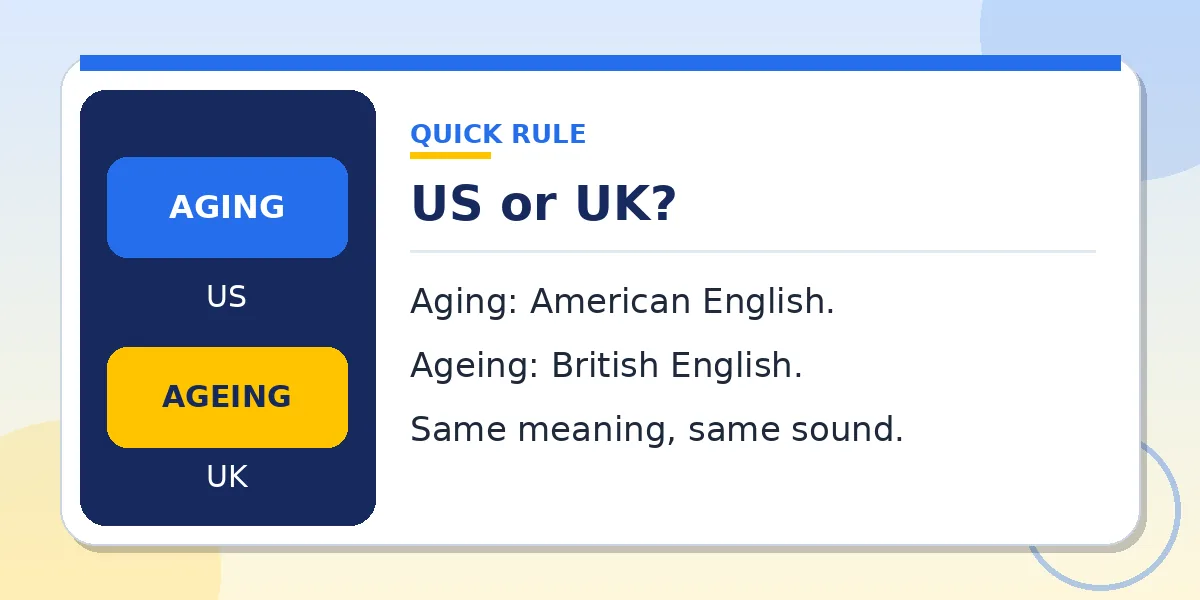
The main difference is regional spelling. American English drops the silent e before the -ing ending. British English usually keeps it in this word.
Both forms describe the same process. The spelling does not change the word’s meaning, grammar, or pronunciation. That is the core answer to the ageing vs aging question.
What Do Aging and Ageing Mean?
Aging and ageing refer to the process of growing older. They can also describe something becoming older, worn, or less useful over time.
The word has several grammatical uses. You can use either spelling as a noun, adjective, or verb form.
Aging or Ageing as a Noun
As a noun, the word describes the process of becoming older. It can refer to people, animals, materials, and systems.
Examples: Aging is a natural part of life. The study examines the effects of aging. The company uses a special process for wine aging. The aging of the building has become noticeable.
Aging or Ageing as an Adjective
As an adjective, the word describes a person, object, or system that is getting older.
Examples: The aging population needs better public services. They are repairing the aging bridge. The actor spoke openly about aging gracefully. The company replaced its aging computers.
Aging or Ageing as a Verb Form
The word also works as the present participle of age. It describes an action or process that is happening.
Examples: She is aging gracefully. The old house is aging quickly. His hair is aging naturally. The material is aging under controlled conditions.
The same examples work with ageing in British English. Only the spelling changes.
Why Does American English Use Aging?
American English generally drops the silent e from a word before adding -ing. This creates the spelling aging from the verb age.
The final e is silent. It does not need to remain when the suffix begins with a vowel.
| Base word | American spelling |
|---|---|
| Age | Aging |
| Stage | Staging |
| Cage | Caging |
| Wage | Waging |
| Bake | Baking |
| Write | Writing |
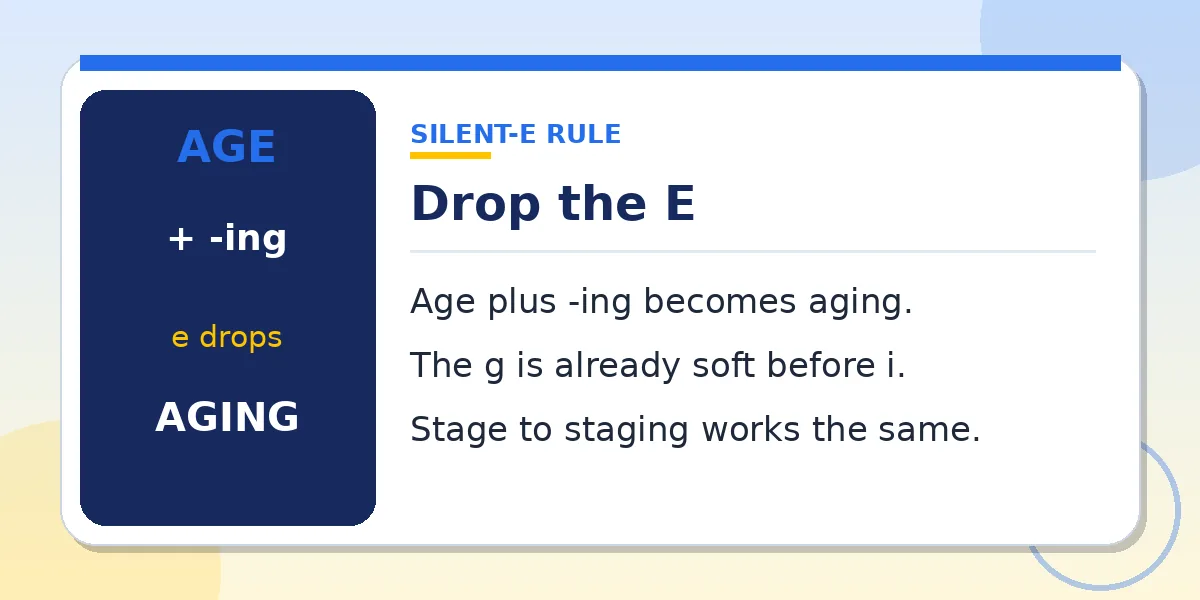
This spelling pattern explains why American dictionaries use aging as the standard form.
British English often keeps the final e in this particular word. That gives readers ageing. The same British pattern appears in judgement, acknowledgement, and likeable, while American English commonly uses judgment, acknowledgment, and likable. Both spellings remain accepted in their respective varieties.
Why Do Some Words Keep the E?
English has exceptions to its spelling patterns. Sometimes, writers keep a silent e to make a word easier to recognize or prevent confusion.
| Word | Meaning |
|---|---|
| Dyeing | Adding color to fabric or another material |
| Dying | Approaching death |
| Singeing | Burning something lightly |
| Singing | Making music with the voice |
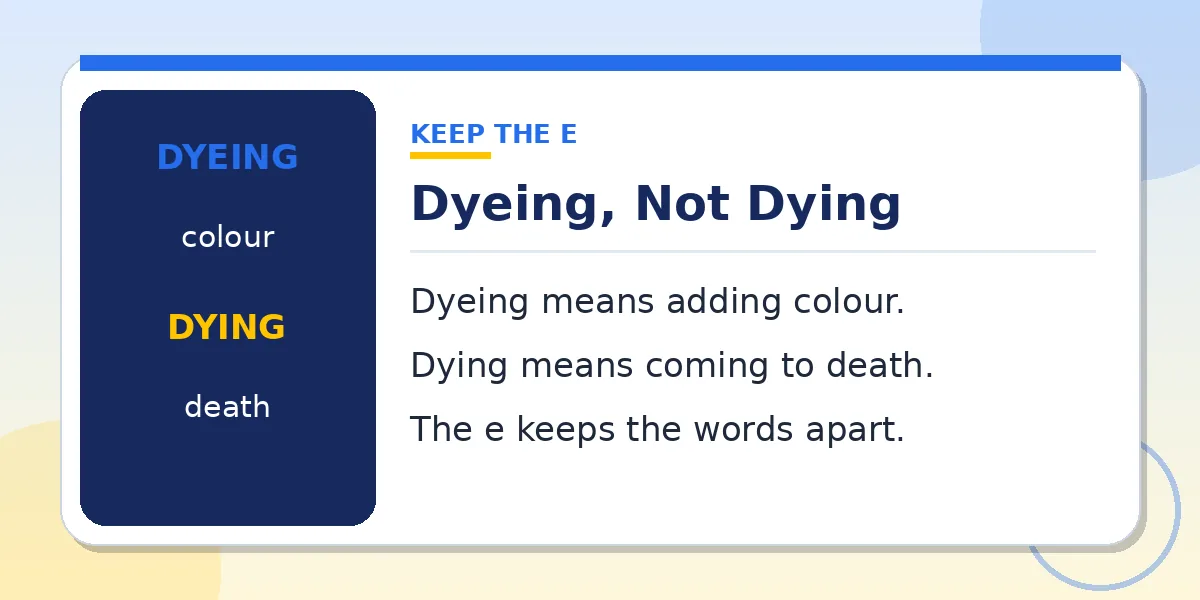
The extra e helps distinguish dyeing from dying. It also separates singeing from singing. The same idea applies to shoeing a horse and toeing a line, where the e keeps the base word clear.
The word aging does not need that extra letter. The letter g already has its soft sound before i. Readers can recognize the intended pronunciation without the final e. In the ageing vs aging pair, no other English word is created when the e is dropped, so American spelling can drop it safely.
How Do You Pronounce Aging and Ageing?
Both spellings have the same pronunciation: AY-jing.
The first syllable receives the main stress. The second syllable has a soft ending.
The spelling difference does not create a pronunciation difference. An American reader and a British reader will say the word the same way. That shared sound is why the ageing vs aging question is about spelling only, not speech.
Aged vs Aging: What Is the Difference?
Aged and aging are related forms of the verb age, but they do not always describe the same stage.
Aged often describes something that has reached a particular age or completed a period of maturation.
Aging describes an ongoing process of becoming older or changing over time.
For example, aged wine or aged cheese describes a finished product that has matured. The aging process describes the changes that happen while the product matures.
| Aged | Aging |
|---|---|
| The restaurant serves aged cheese. | The cheese is aging in a cool room. |
| They bought a bottle of aged wine. | The wine is aging in wooden barrels. |
| The aged man signed the document. | The man is aging naturally. |
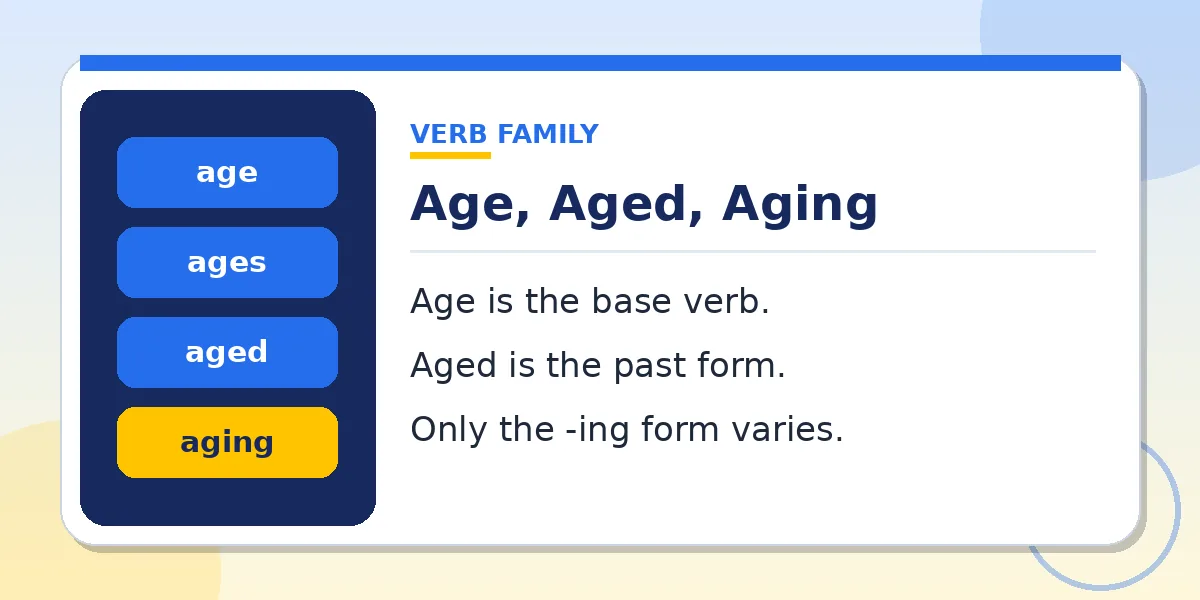
Remember that aged does not change to aging in British English. The regional spelling difference applies to the -ing form.
| Verb form | Spelling |
|---|---|
| Base form | Age |
| Third-person singular | Ages |
| Past tense | Aged |
| Present participle, US | Aging |
| Present participle, UK | Ageing |
Common Words and Phrases With Aging
You will often see the word in compounds and common expressions. The regional spelling usually follows the same pattern. The ageing vs aging pattern also shows up in these compounds, with the e kept only in the British form.
| American English | British English |
|---|---|
| Anti-aging | Anti-ageing |
| Aging-related | Ageing-related |
| Aging population | Ageing population |
| Aging gracefully | Ageing gracefully |
| Aging infrastructure | Ageing infrastructure |
Here are some examples in sentences: The company developed an anti-aging skincare product. Researchers study aging-related changes in the body. The aging population may need more community support. She believes in aging gracefully. The city plans to replace its aging infrastructure.
Other expressions include aging in place and aging out. Aging in place means remaining in your home as you grow older. Aging out describes reaching an age limit for a program or activity.
Is Ageism Spelled Differently?
No. Ageism has the same spelling in American and British English.
It describes unfair treatment or prejudice based on someone’s age. Do not add an extra e to this word.
Example: The company introduced training to help prevent ageism in the workplace.
Aging vs Ageing in Different Countries
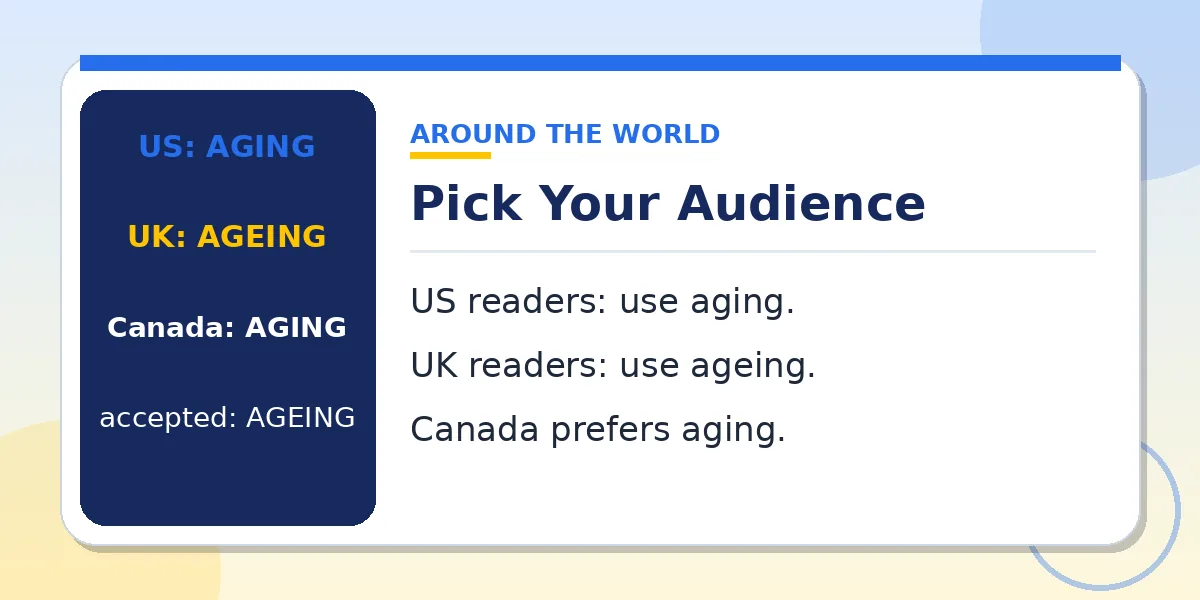
English spelling varies across countries. The best choice depends on your audience and the style you follow. The ageing vs aging choice is therefore a question of audience, not correctness.
United States
Aging is the standard American spelling. Use it in US school assignments, websites, reports, and professional writing.
The National Institute on Aging, a US government organization, also uses this spelling in its official name.
United Kingdom
Ageing is the usual British spelling. British writers commonly use it in books, newspapers, educational materials, and official documents.
The American form, aging, is also recognizable. However, British writers generally choose ageing when following British spelling conventions.
Canada
Canadian English generally prefers aging, like American English. However, ageing is also accepted.
The Government of Canada’s Language Portal identifies aging as the preferred form in Canada and the United States. It also recognizes the British preference for ageing.
Australia and New Zealand
Australian and New Zealand English commonly follow British spelling conventions. Therefore, ageing is a familiar choice in these countries.
Follow the spelling guide used by your school, employer, or publication if it has a specific preference.
What Should You Use for an International Audience?
Choose one spelling and use it throughout your content. If your main readers are American, use aging. If your readers are mainly British, use ageing.
For a broad international audience, check the publication’s preferred English variety. Consistency matters most.
Common Spelling Mistakes to Avoid
The difference is simple, but writers sometimes confuse the forms. Many ageing vs aging mistakes come from mixing the two forms in one document. Watch out for these common mistakes.
1. Mixing Both Spellings in One Article
Avoid switching between aging and ageing without a reason.
Incorrect: The aging population faces challenges, and the ageing process affects everyone.
Consistent American English: The aging population faces challenges, and the aging process affects everyone.
2. Calling Ageing Incorrect
Ageing is not a spelling error in British English. It is the conventional British form.
Use aging for American readers and ageing for British readers.
3. Confusing Aged With Aging
These words have related meanings, but they serve different purposes.
Use aged for a finished or completed state when appropriate. Use aging for an ongoing process.
4. Adding an Extra Letter
The correct American spelling is aging, not ageging or aginge.
The correct British spelling is ageing. Do not add another letter to either form.
5. Changing the Spelling of Ageism
The word ageism stays the same in both varieties of English. It does not become ageism with an extra letter or a different regional ending.
How to Remember the Correct Spelling
Use this simple memory trick: E for England gives ageing. Aging is for America.
The word England begins with E, just like the British spelling ageing. The American spelling aging drops that extra letter.
You can also remember it through the country names: America: aging. England: ageing.
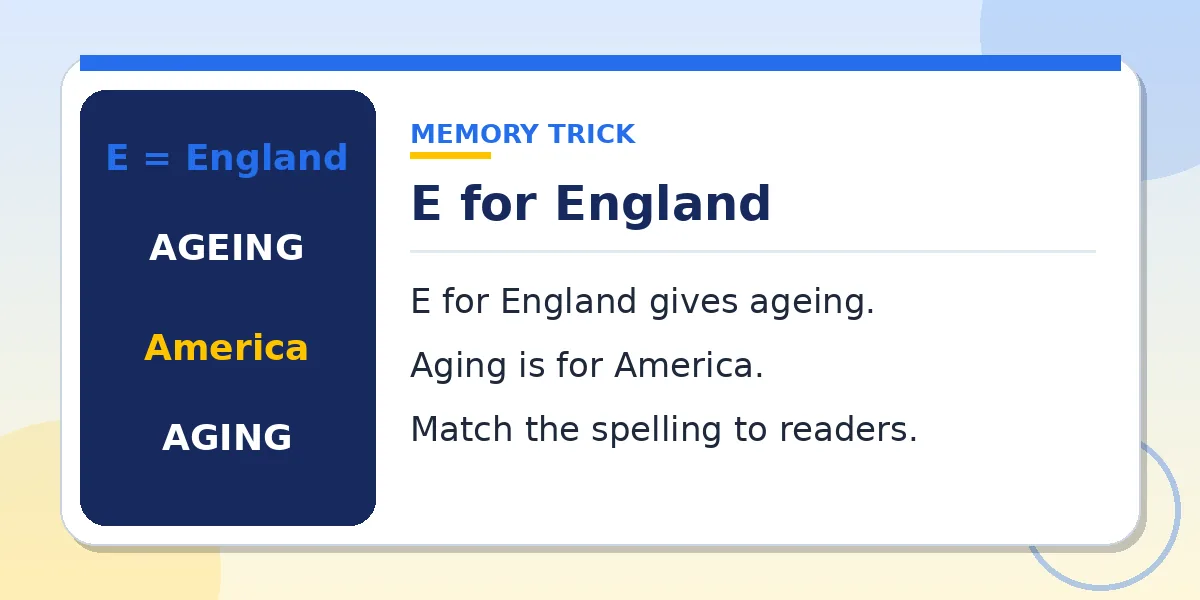
This trick helps you choose the correct form quickly. Just remember to follow your audience’s spelling conventions.
How to Choose Between Aging and Ageing in Your Writing
Choosing the right spelling depends on who will read your work and which spelling rules your publication follows. This ageing vs aging checklist makes the choice simple.
1. Consider Your Target Audience
Use aging when writing for readers in the United States. Choose ageing for a primarily British audience. Canadian readers commonly see both forms, although aging is preferred.
2. Follow Your Publication’s House Style
Some publishers, schools, and businesses have their own style guides. Check the house style before writing or editing. If it specifies American or British English, apply that choice throughout the document.
3. Set the Correct Spellchecker Language
Your spellchecker can help identify inconsistent regional spelling. Make sure its language matches your intended audience.
In Microsoft Word:
- Select the text you want to check. Press Ctrl+A to select the whole document.
- Open Review and choose Language.
- Select Set Proofing Language.
- Choose English (United States) or English (United Kingdom).
- Select OK.
In Google Docs:
- Open your document.
- Select File, then Language.
- Choose English (United States) or English (United Kingdom).
- Run the spelling and grammar check from the toolbar.
The available language options and menus may vary by version. A spellchecker can flag words based on its selected language, so review suggestions in context.
4. Use One Spelling Consistently
Do not switch between aging and ageing in the same article unless you are explaining the difference. After editing, search the document for both spellings. Check every result and make sure each one follows your chosen English variety.
Practice Questions
Test what you have learned. Fill in the blanks or choose the correct word in each sentence.
Fill in the Blanks
- In American English, the preferred spelling is ______.
- In British English, the usual spelling is ______.
- The ______ process is a natural part of life.
- The British spelling of anti-aging is ______.
- Both spellings have the same ______.
Choose the Correct Word
- The dog is (aging / ageing) gracefully. Choose the American spelling.
- The British report discusses an (aging / ageing) population.
- She is (dyeing / dying) her hair.
- The candle was (singeing / singing) the edge of the fabric.
- The person was (aged / aging) 40 years when the record was created.
Answer Key
- Aging. American English uses aging as its preferred spelling.
- Ageing. British English usually keeps the final e.
- Aging. This is the preferred American spelling for the natural process.
- Anti-ageing. British English keeps the final e in this compound.
- Meaning and pronunciation. Both regional spellings have the same meaning and pronunciation.
- Aging. The question asks for the American spelling.
- Ageing. The sentence specifies a British report.
- Dyeing. It means changing the color of her hair.
- Singeing. It means lightly burning or scorching the fabric.
- Aged. Aged describes the person’s age when the record was created.
Frequently Asked Questions
1. Is ageing wrong in American English?
No, ageing is a recognized British spelling, not a spelling mistake. American English normally uses aging instead. If you are writing for US readers, choose aging to match standard American spelling conventions.
2. Is aging wrong in British English?
No, aging is the American spelling, and British readers can understand it. However, ageing is the usual British form. Choose ageing when writing for a UK audience or following British spelling conventions.
3. Can I use aging and ageing interchangeably?
Both spellings have the same meaning and pronunciation. You can use either, depending on your audience. However, avoid switching between them in one document unless you are discussing regional spelling differences.
4. Is it anti-aging or anti-ageing?
Both forms are accepted regional spellings. Anti-aging is standard in American English, while anti-ageing is common in British English. Choose the version that matches your readers and use it consistently.
5. Is ageism spelled the same in American and British English?
Yes, ageism has the same spelling in both varieties. It means prejudice or unfair treatment based on someone’s age. Unlike aging and ageing, this word does not have a regional spelling difference.
6. Is aging a noun, verb, or adjective?
It can be all three. Aging works as a noun for the process of growing older, an adjective for something becoming older, and a verb form in sentences describing an ongoing process.
7. What is the difference between aged and aging?
Aged often describes something that has reached a particular age or completed maturation. Aging describes an ongoing process of becoming older or changing over time, such as wine aging in barrels.
Final Check
Before you publish, pick aging for the United States or ageing for the United Kingdom, apply that choice to every heading and compound, and run a search for the other spelling. That final check settles the ageing vs aging question for your document.
Related ClarifyWords Guides
Explore these related spelling guides for more American and British English differences:
- Gray vs Grey
- Judgment vs Judgement
- Defense vs Defence
- Toward vs Towards
- Aluminium or Aluminum
- Holistic or Wholistic
- Leafs or Leaves
- Requester vs Requestor
Visit the Spelling Differences category: Spelling Differences