

Laid or Layed: Which Spelling Is Correct?

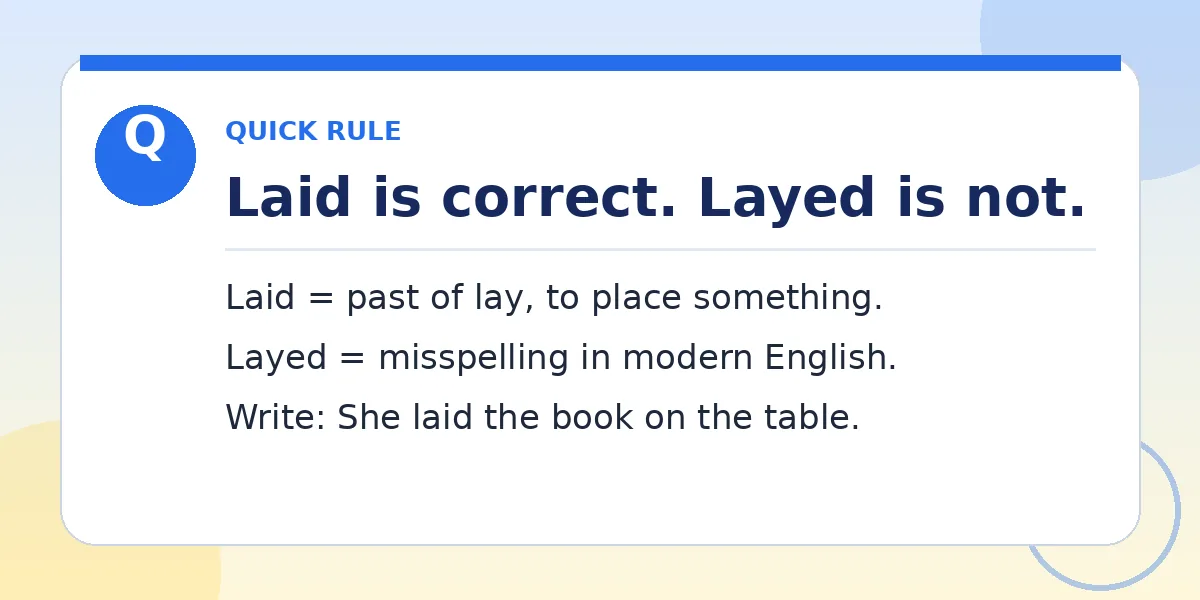
Is it laid or layed? The correct spelling is laid. It is the past tense and past participle of lay, which means to put or place something down. Layed is a misspelling in modern standard English. For example, write ‘She laid the book on the table,’ not ‘She layed the book on the table.’ The confusion often comes from mixing up lay and lie. Their past forms are different, even though they look similar. This guide explains the correct spelling, the grammar behind it, and how to avoid the most common mistakes.
Table of Contents
- Quick Answer: Laid or Layed?
- What Does Laid Mean?
- Why Is Layed Incorrect?
- Lay vs Lie: What’s the Difference?
- Common Expressions With Laid
- Common Mistakes to Avoid
- How to Remember the Correct Spelling
- Is Laid American or British English?
- Practice Questions
- Frequently Asked Questions
Quick Answer: Laid or Layed?
Laid is correct. Layed is incorrect in modern standard English. Laid is the past tense and past participle of lay. Use it when someone puts, places, or sets something down.
| Laid | Correct | Past tense and past participle of lay. |
| Layed | Incorrect | Misspelling in modern standard English. |
Examples: Correct: She laid her phone on the counter. Incorrect: She layed her phone on the counter. Correct: They have laid the foundation. Incorrect: They have layed the foundation.
That is the whole laid or layed question in one line: laid wins, every time. Remember that laid does not always work when describing someone resting. In that situation, you may need lay or lain, depending on the tense.
What Does Laid Mean?
Laid is the past tense and past participle of the verb lay. It means that someone put, placed, or set something in a particular position. The verb lay is transitive. This means it needs a direct object to complete its meaning. For example: She laid the keys on the desk. He laid the baby in the crib. They laid the bricks along the garden path. The hen laid an egg. In each sentence, something receives the action. The keys, baby, bricks, and egg are the direct objects.
Laid as the Past Tense of Lay
Use laid when describing an action that happened in the past. Examples: I laid my jacket on the chair. She laid the documents beside the computer. They laid the groundwork for the new project. He laid his tools on the workbench. Each sentence describes someone placing something somewhere.
Laid as the Past Participle of Lay
Use laid with helping verbs such as has, have, and had. It also appears in passive constructions. Examples: She has laid the papers on my desk. We had laid the groundwork before the meeting. The workers have laid the new flooring. The foundation has been laid. Notice that laid stays the same in both the past tense and past participle.
| Putting something down | She laid her bag on the floor. |
| Placing a baby somewhere | He laid the baby in the crib. |
| Producing an egg | The hen laid an egg. |
| Building a foundation | They laid the foundation for the house. |
| Preparing a plan | The team laid out its strategy. |
| Placing a bet | He laid a bet on the race. |
Why Is Layed Incorrect?
Layed looks reasonable because English often forms past tense verbs by adding -ed. For example, play becomes played, and walk becomes walked. However, lay follows a different spelling pattern. Its past tense and past participle are both laid. Compare: Pay / Paid. Say / Said. Lay / Laid. You should not add -ed to lay to create layed. That spelling is a misspelling in modern standard English. You might encounter layed in older writing or historical spelling references. Such appearances do not make it an acceptable modern spelling. Use laid in school assignments, professional documents, emails, and everyday writing. When you are unsure about laid or layed, check whether you mean the past form of lay. If you do, the answer is always laid.
Lay vs Lie: What’s the Difference?
Understanding lay and lie makes it easier to choose the correct word. These verbs have different meanings and follow different conjugation patterns. The simplest rule is: Lay: Put or place something down. It needs an object. Lie: Recline or rest. It does not need an object. For example: I lay the blanket on the bed. I lie on the bed when I feel tired. The first sentence describes placing something. The second describes resting. The confusion becomes clearer when you look at their past forms.
Lay, Laid, and Laying
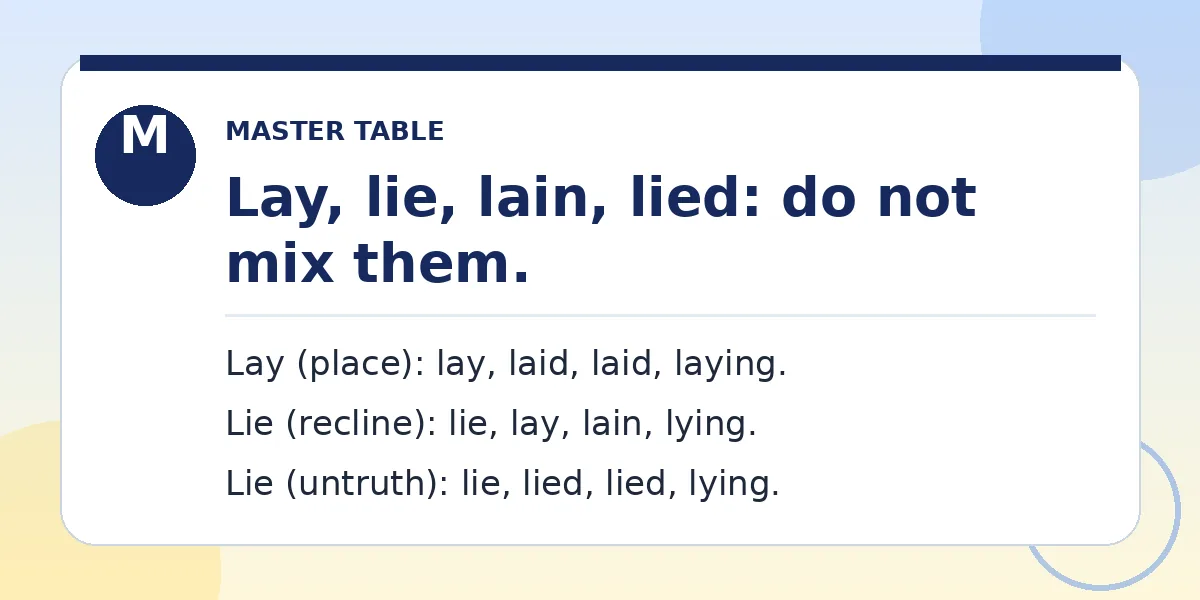
Use lay when someone places something somewhere. It requires a direct object. Forms: Present Lay, Past tense Laid, Past participle Laid, Present participle Laying. Examples: I lay my phone on the desk every evening. Yesterday, I laid my phone on the desk. I have laid my phone in the same place. She is laying the blanket on the bed. Each example includes an object that receives the action.
Lie, Lay, and Lain
Use lie when someone or something reclines or rests. This verb does not take a direct object. Forms: Present Lie, Past tense Lay, Past participle Lain, Present participle Lying. Examples: I lie on the couch after work. Yesterday, I lay on the couch. I have lain on the bed all morning. She is lying in bed. Notice that lay is the past tense of reclining lie. It is not the same use as lay meaning to place something.
Lie, Lied, and Lying
The verb lie has another meaning: to tell an untruth. Forms: Present Lie, Past tense Lied, Past participle Lied, Present participle Lying. Examples: I never lie to my family. He lied about his age. She has lied about the situation. They are lying about what happened. Use lied when someone tells something untrue. Use lay or lain when describing someone reclining.
| Verb | Present | Past tense | Past participle | Present participle | Needs an object? |
|---|---|---|---|---|---|
| Lay (put something down) | Lay | Laid | Laid | Laying | Yes |
| Lie (recline) | Lie | Lay | Lain | Lying | No |
| Lie (tell an untruth) | Lie | Lied | Lied | Lying | No |
Keep these differences in mind: Laid is the past tense and past participle of lay. Lay is the past tense of reclining lie. Lain is the past participle of reclining lie. Lied is the past tense and past participle of lie meaning to tell an untruth. Laying describes placing something. Lying describes reclining or telling an untruth. A correctly spelled word can still be the wrong choice for a sentence. Always check its meaning and grammar.
Common Expressions With Laid
Several everyday expressions use laid. Their spelling stays the same, even when the phrase has a special meaning.
Laid Down vs Layed Down
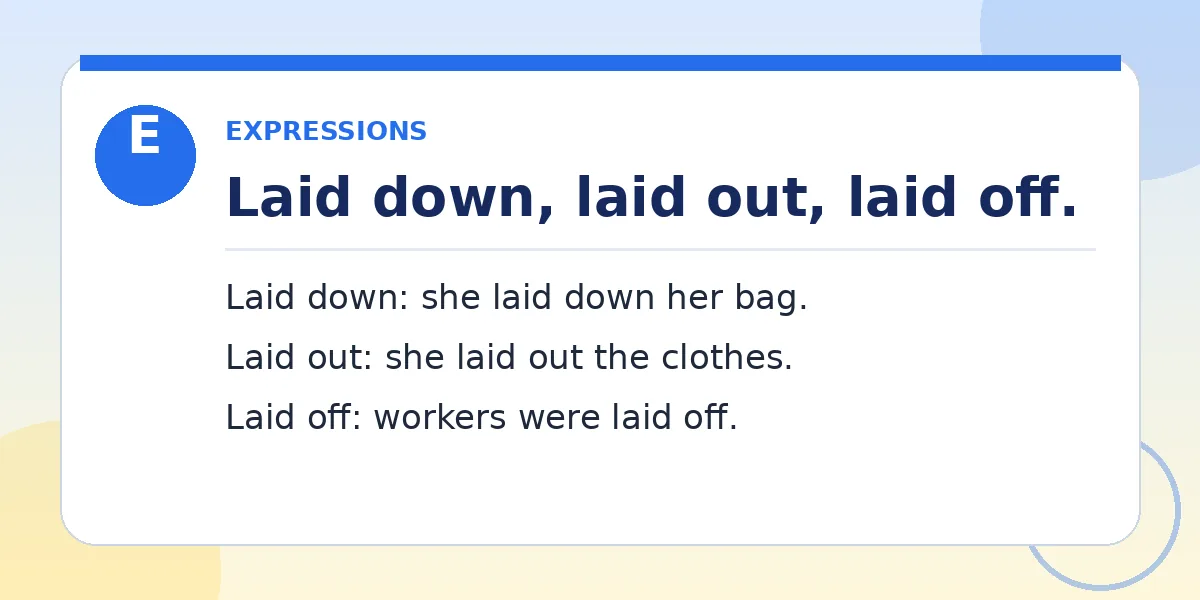
Laid down is correct when someone puts something down. Layed down is incorrect. Examples: She laid down her bag near the door. The manager laid down the new rules. He laid down his tools after work. The expression laid down the law means to state rules firmly or demand that others follow them. However, there is an important difference when describing rest. Correct: He lay down for a nap yesterday. Incorrect: He laid down for a nap yesterday. When someone reclines, use lie and its correct verb forms. Do not confuse it with placing an object down.
Laid Out vs Layed Out
Laid out is the correct spelling. It usually means arranged, spread, or presented something clearly. Examples: She laid out her clothes for tomorrow. The designer laid out the plans. He laid out all the documents on the table. In informal speech, laid out can also mean knocked unconscious. Example: The boxer was laid out during the match.
Laid Off vs Layed Off
Laid off is correct. It describes an employer ending someone’s employment, often because of reduced work or business needs. Examples: The company laid off several employees. She was laid off last month. Many workers were laid off after the factory closed. Being laid off does not necessarily mean an employee did something wrong. It often results from business changes.
| Expression | Meaning | Example |
|---|---|---|
| Laid up | Unable to work or function normally, often because of illness or injury | He was laid up with the flu. |
| Laid-back | Relaxed and easygoing | She has a laid-back personality. |
| Laid to rest | Buried or brought to a conclusion | The issue was finally laid to rest. |
| Laid the groundwork | Prepared the basis for something | They laid the groundwork for the project. |
| Laid an egg | Produced an egg | The hen laid an egg. |
| Laid the table | Arranged dishes and utensils for a meal | She laid the table before dinner. |
| Laid a bet | Placed a bet | He laid a bet on the race. |
| Laid claim to | Asserted ownership or a right | They laid claim to the property. |
These expressions use the established spelling laid. Avoid replacing it with layed.
Common Mistakes to Avoid
Most laid or layed errors come from two causes: adding -ed to lay, or picking the wrong verb from the lay and lie family. Here are common mistakes and their corrections.
| Mistake | Correction | Why |
|---|---|---|
| She layed the keys on the desk. | She laid the keys on the desk. | The past tense of lay is laid. |
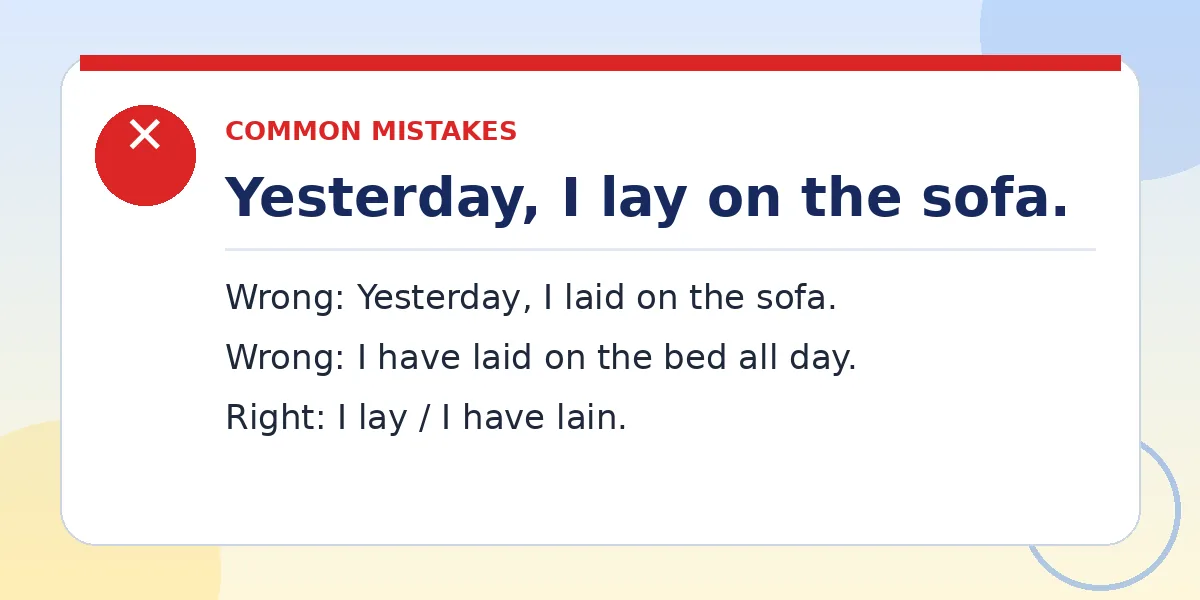
| Yesterday, I laid on the sofa. | Yesterday, I lay on the sofa. | Lay is the past tense of reclining lie. |
| I have laid on the bed all day. | I have lain on the bed all day. | Lain is the past participle of reclining lie. |
| Yesterday, I lied on the floor. | Yesterday, I lay on the floor. | Lied means told an untruth. |
| She lay the book on the table yesterday. | She laid the book on the table yesterday. | The sentence needs the past tense of lay. |
| I am laying down for a nap. | I am lying down for a nap. | Lying describes reclining. |
| She is lying the book on the desk. | She is laying the book on the desk. | Laying describes placing something. |
| They have layed the flooring. | They have laid the flooring. | The past participle is laid. |
Why Spellcheck May Miss These Errors
Spellcheck does not always catch incorrect verb choices. Words such as lay, laid, lain, and lied are all valid English words. For example, a spellchecker may accept ‘I laid on the sofa.’ However, the sentence uses the wrong verb form. Check both spelling and meaning before submitting your work. This is especially important in school assignments and professional writing.
How to Remember the Correct Spelling
If laid or layed still feels tricky, a few simple memory tricks can help you choose the right word without memorizing complicated grammar rules.
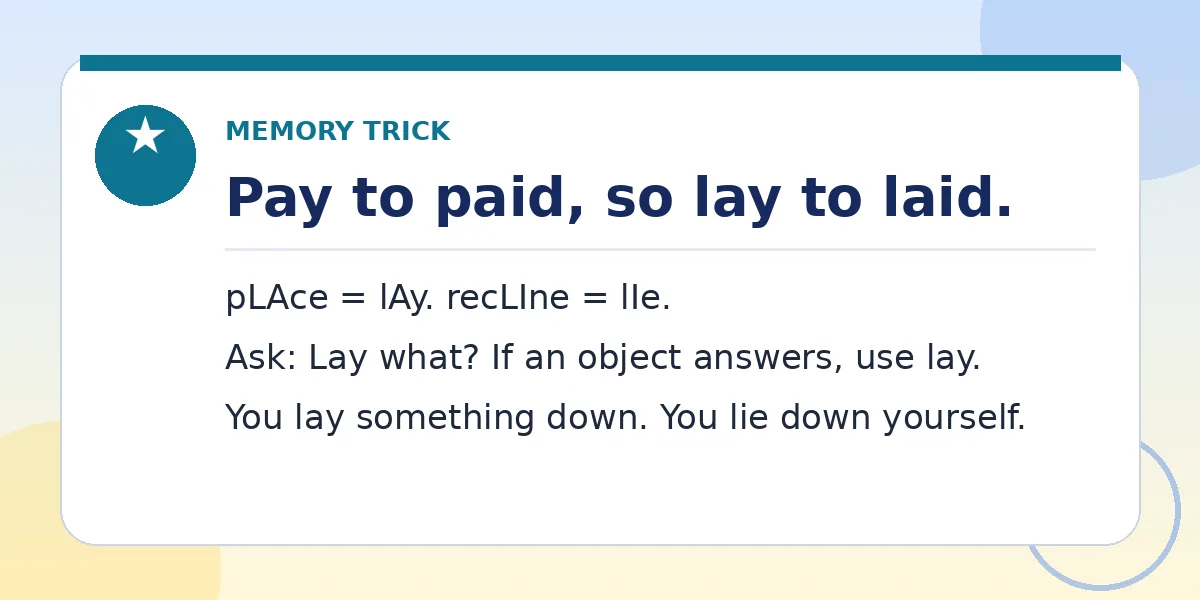
Remember Pay to Paid and Lay to Laid
Think of these familiar spelling patterns: Pay becomes paid. Say becomes said. Lay becomes laid. This helps you remember that laid is the correct past form. You do not need to add -ed.
Use the Place vs Recline Trick
Remember these two words: Place: Use lay when placing something. Recline: Use lie when resting yourself. For example: I laid the book on the table. I lay on the couch yesterday. This simple distinction helps you choose the right verb. The full question behind it is laid or layed, and the place test points to lay, whose past form is laid.
Ask Yourself ‘Lay What?’
If you are unsure whether to use lay, ask yourself, ‘Lay what?’ If you can identify an object, you probably need a form of lay. Example: She laid what? The book. The book receives the action, so laid is correct. If someone is simply resting, there is no direct object. Use the appropriate form of lie instead. Easy rule to remember: You lay something down, but you lie down yourself. Something lies where it has been laid.
Is Laid American or British English?
Laid is the standard spelling in both American and British English. There is no US or UK spelling difference. Both varieties use laid as the past tense and past participle of lay. Examples: American English: She laid the book on the desk. British English: She laid the book on the desk. The spelling remains the same. Layed is not the preferred modern spelling in either variety. So for laid or layed, region changes nothing.
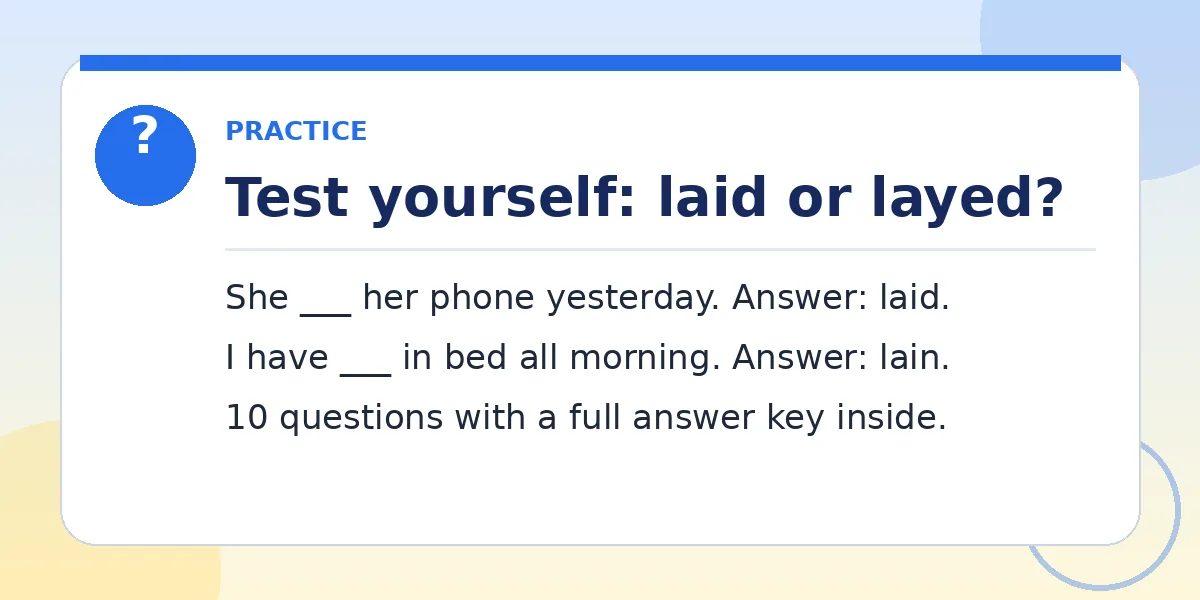
Practice Questions: Laid or Layed?
Test your understanding with these ten questions. Choose the correct word or verb form for each sentence.
- She _____ her phone on the kitchen counter yesterday. (laid / layed)
- He has _____ the foundation for the new house. (laid / layed)
- I _____ on the couch for two hours yesterday. (lay / laid)
- The hen has _____ three eggs this morning. (laid / layed)
- She is _____ down because she feels tired. (laying / lying)
- They were _____ off because the company reduced its workforce. (laid / layed)
- I have _____ in bed all morning. (laid / lain)
- He _____ about his experience during the interview. (lay / lied)
- The teacher _____ out the instructions for the students. (laid / layed)
- She _____ the baby in the crib last night. (laid / layed)
| Question | Answer | Explanation |
|---|---|---|
| 1 | Laid | Past tense of lay, meaning to place something. |
| 2 | Laid | Past participle of lay. |
| 3 | Lay | Past tense of reclining lie. |
| 4 | Laid | Past participle of lay. |
| 5 | Lying | Present participle of reclining lie. |
| 6 | Laid | Correct spelling in the expression laid off. |
| 7 | Lain | Past participle of reclining lie. |
| 8 | Lied | Past tense of lie, meaning to tell an untruth. |
| 9 | Laid | Correct spelling in the expression laid out. |
| 10 | Laid | Past tense of lay, meaning to place something. |
If you missed a few questions, review the master comparison table. Pay particular attention to the difference between lay, lain, and lied.
Frequently Asked Questions
Is Layed a Word?
Layed is not a correct spelling in modern standard English. It may appear in older historical writing, but it is not accepted today. Use laid whenever you need the past tense or past participle of lay.
What Is the Past Tense of Lay?
The past tense of lay is laid. Use it when describing someone placing something down in the past. For example, ‘She laid her notebook on the table before her class started yesterday morning.’
Is It Laid Down or Layed Down?
Laid down is correct when someone places something down. For example, ‘He laid down his phone.’ When describing rest, use lay down for the past tense, as in ‘He lay down yesterday.’
What Is the Difference Between Laid, Lay, and Lain?
Laid is the past tense and past participle of lay, meaning to place something. Lay is also the past tense of reclining lie. Lain is its past participle in this verb pattern.
What Is the Past Tense of Lie?
It depends on the meaning. When lie means recline, its past tense is lay. When it means telling an untruth, its past tense is lied. For example, ‘I lay down’ and ‘He lied yesterday.’
Why Do People Write Layed Instead of Laid?
People often write layed because they apply the regular -ed ending to lay. However, lay follows an irregular spelling pattern. Its correct past tense is laid, just as pay becomes paid.
Is It Laying or Lying?
Use laying when someone places an object somewhere, as in ‘She is laying the book on the table.’ Use lying when someone reclines, as in ‘She is lying on the couch.’
Final Takeaway
For laid or layed, remember, laid is the correct spelling when you mean the past tense or past participle of lay. Layed is a common misspelling in modern standard English. Remember that laid belongs to the verb lay, which requires an object. For reclining, use lie, lay, lain, and lying. For telling an untruth, use lie, lied, lied, and lying. Once you understand the difference between placing something and reclining, choosing the correct verb becomes easier. For more grammar and word choice guidance, explore these ClarifyWords guides: Fewer vs. Less, Which vs. That, A vs. An, Lead or Led, Learn or Learned, Learned or Learnt, and Grammar Guides.