

Hot or Cold: Meaning, Difference, and Examples
Quick Answer
Hot means having a relatively high temperature. Cold means having a relatively low temperature. They are opposite adjectives, but temperatures can also be warm, lukewarm, or cool. Both words have figurative meanings, too. Hot can describe something popular, spicy, or exciting. Cold can describe someone who seems unfriendly or uninterested. The meaning of hot or cold depends on the context. It might describe temperature, food, feelings, popularity, or a familiar guessing game.
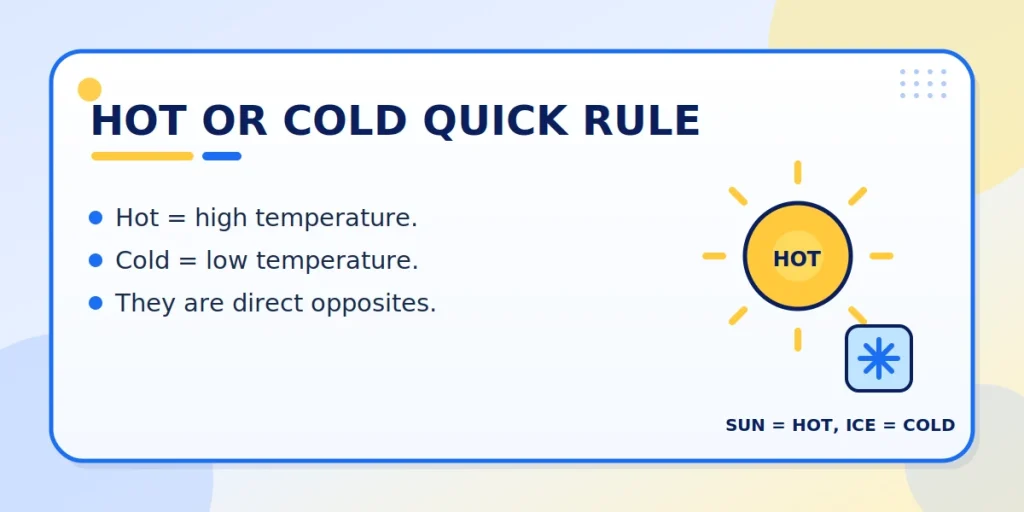
Table of Contents
- Quick Answer
- What Does Hot Mean?
- What Does Cold Mean?
- Hot or Cold: Temperature Scale
- Hot vs Cold: Comparison Table
- Hot or Cold in Everyday Life
- What Does “Blow Hot and Cold” Mean?
- The Hot and Cold Game
- Word History and Etymology
- Other Meanings of Hot and Cold
- Common Mistakes with Hot and Cold
- Memory Trick
- Practice Questions
- Frequently Asked Questions
- Keep Learning
What Does Hot Mean?
Hot means having a relatively high temperature. It describes weather, food, drinks, objects, and body temperature. A hot day feels warm and sunny. Hot soup steams when you serve it. Hot water can burn your skin. Hot coffee is served fresh and steaming.
The word hot also has figurative meanings. A hot song is popular and in demand. A hot topic is widely discussed. A hot streak means a run of good luck. Someone who looks hot is attractive. Hot sauce is spicy. Hot off the press means recently printed. The word hot can also describe anger. He was hot with anger. That means he felt very angry.
What Does Cold Mean?
Cold means having a relatively low temperature. It describes weather, food, drinks, objects, and body temperature. A cold day feels chilly and uncomfortable. Cold water is refreshing on a hot day. Cold hands feel numb in winter. Cold wind makes you shiver.
The word cold also has figurative meanings. A cold reply feels unfriendly and distant. A cold-hearted person seems unkind. A cold reaction shows little interest. Cold feet means feeling nervous before an important event. Cold sweat means sweating because of fear. The word cold can also describe illness. Catching a cold means getting a common illness. It causes a runny nose and cough. A trail that has gone cold is no longer fresh, and a player who enters a game cold starts without warming up first.
Hot or Cold: Temperature Scale
Temperature words form a scale from hottest to coldest. Each word describes a different level of heat or cold. Here is the scale, from hottest to coldest:
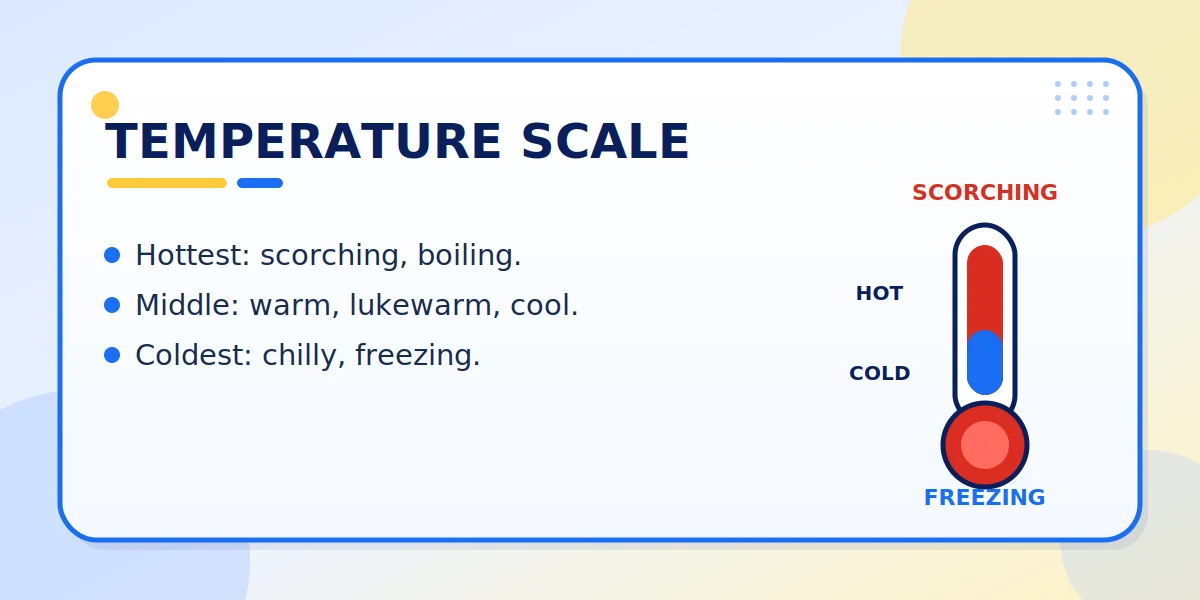
- Scorching: Extremely hot, like a desert at noon
- Boiling: Very hot, like water at 100°C or 212°F
- Hot: High temperature, like fresh coffee
- Warm: Comfortably hot, like a sunny day
- Lukewarm: Slightly warm, like tea left out
- Tepid: Slightly warm, often used for water
- Cool: Pleasantly low temperature, like a spring evening
- Cold: Low temperature, like a winter day
- Chilly: Uncomfortably cold, like a morning in autumn
- Freezing: Extremely cold, like ice or snow
These words help us describe temperature more precisely. Warm is between hot and cool. Cool is between warm and cold. Freezing means extremely cold. Use the right word for the right temperature.
Hot vs Cold: Comparison Table
| Context | Hot | Cold |
|---|---|---|
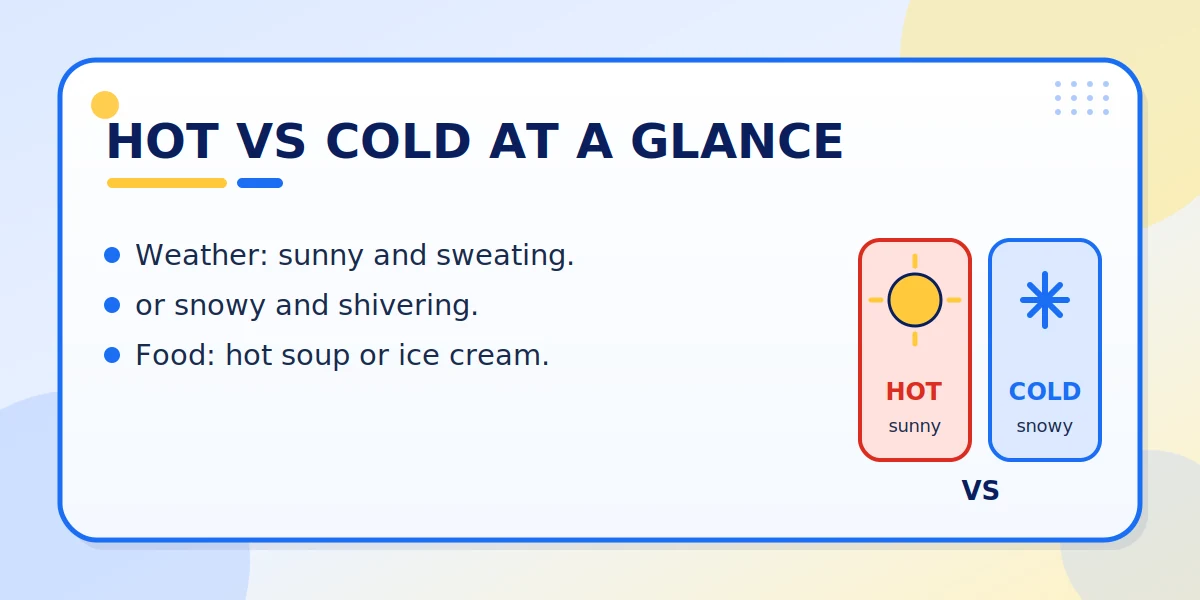
| Weather | Hot: 35°C (95°F), sunny, sweating | Cold: 0°C (32°F), snowy, shivering |
| Food and Drink | Hot soup, hot coffee, hot pizza | Cold water, cold salad, ice cream |
| Body | Hot: fever, sweating, flushed | Cold: shivering, goosebumps, numb fingers |
| Feelings | Hot: anger, passion, excitement | Cold: unmoved, distant, uninterested |
| Personality | Hot: warm, friendly, enthusiastic | Cold: unfriendly, distant, reserved |
| Popularity | Hot: trending, popular, in demand | Cold: unpopular, ignored, out of fashion |
| Spiciness | Hot: spicy, chili, pepper | Cold: mild, not spicy, refreshing |
Hot or Cold in Everyday Life
Hot and cold appear in many everyday phrases. These phrases use temperature words to describe feelings, situations, and ideas. Here are some common examples:
- Hot topic: A subject that many people discuss
- Hot news: Recent and important news
- Hot seat: A position under pressure
- Hot off the press: Recently printed or published
- Cold feet: Feeling nervous before an important event
- Cold shoulder: Ignoring someone on purpose
- Cold call: Calling someone without prior contact
- Cold war: A conflict without direct fighting
These phrases show how the pair hot or cold goes beyond temperature. They describe emotions, social situations, and everyday life. Learning these phrases helps you understand English better.
What Does “Blow Hot and Cold” Mean?
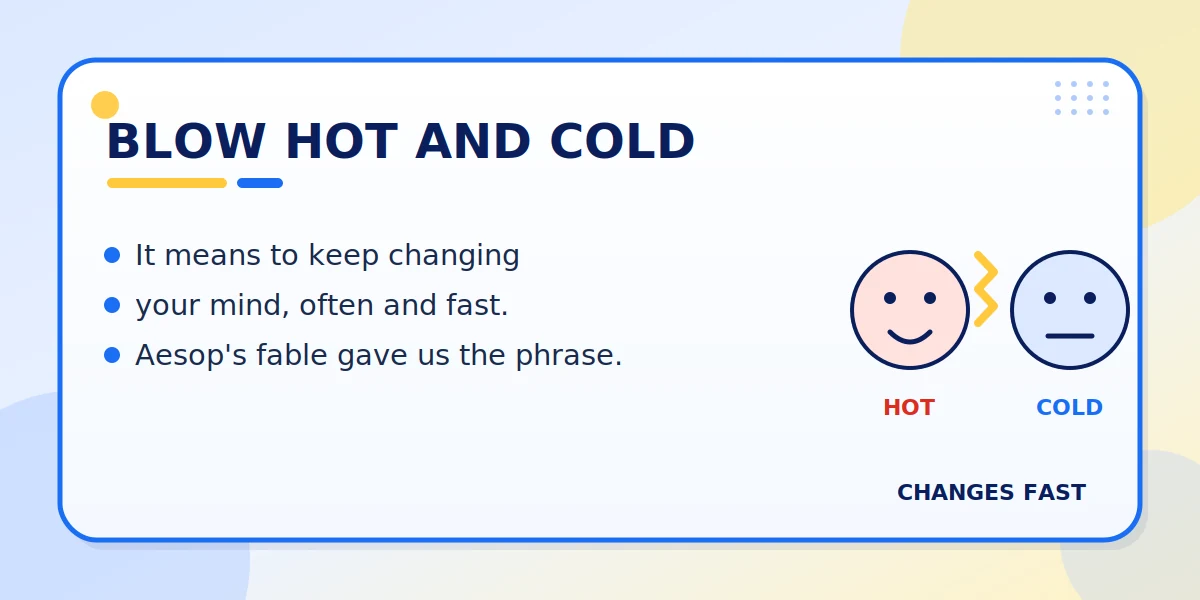
To blow hot and cold means to change your opinion, feelings, or support often. It describes someone who is sometimes enthusiastic and sometimes uninterested or negative. That kind of inconsistency can confuse other people.
Origin
The idiom comes from Aesop’s fable The Man and the Satyr. In the fable, a man blows on his hands to warm them and on his soup to cool it. The satyr is confused by this behavior. William Chillingworth used it in English in 1638. He used it to describe people who change their minds often. The idiom has been used in English ever since.
Examples
- She blows hot and cold about the job. One day she loves it, and the next day she wants to quit.
- The committee blows hot and cold on the proposal. They support it one week and oppose it the next.
- Do not blow hot and cold with your friends. Be consistent in your feelings.
Synonyms
- Be inconsistent
- Be fickle
- Be indecisive
- Flip-flop
- Waver
- Change your mind often
The Hot and Cold Game
The hot and cold game is a fun guessing game for children. It is also called the hot and cold guessing game. One player hides an object while others close their eyes. The other players search for the object. The hider gives clues using hot and cold.
How to Play
- One player hides a small object in the room.
- The other players close their eyes while the object is hidden.
- The players open their eyes and start searching.
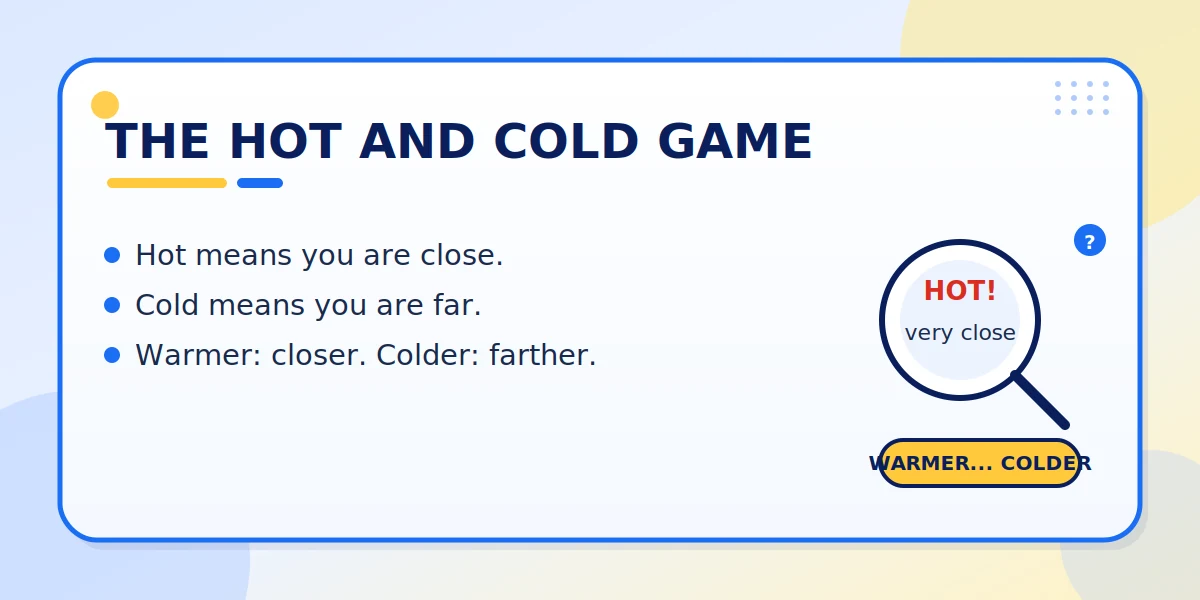
- The hider says hot when a player is close to the object.
- The hider says cold when a player is far from the object.
- The hider says warmer when a player gets closer.
- The hider says colder when a player moves away.
- The player who finds the object wins.
Clue Scale
- Burning: Very close to the object
- Hot: Close to the object
- Warm: Getting closer
- Lukewarm: Neither close nor far
- Cool: Getting farther
- Cold: Far from the object
- Freezing: Very far from the object
This game helps children learn about temperature words. It also teaches them to follow clues and think carefully.
Word History and Etymology
Hot
Hot comes from Old English hat. It is related to Proto-Germanic *haitaz. The word heat comes from the same root. Other related words include heater and hothead. Hot has been used in English for over a thousand years.
Cold
Cold comes from Old English ceald. It is related to Proto-Germanic *kaldaz. The word cool comes from the same root. Other related words include chill and cold-blooded. Cold has been used in English for over a thousand years.
Temper, Temperament, and Temperature
Temper, temperament, and temperature all come from Latin temperare. This Latin word means to mix or moderate. Temper describes a state of mind or disposition. Temperament describes a person’s nature or character. Temperature is a measure of heat or cold. These words connect to hot and cold. They show how temperature affects our feelings and behavior.
Other Meanings of Hot and Cold
The pair hot or cold also appears in science, money, and health, so it helps to know these senses too. In crypto, a hot wallet keeps its signing keys on an internet-connected device, while a cold wallet keeps its keys offline. In programming, a hot stream produces data on its own, while a cold stream produces data only when someone asks for it. In health, cold packs are often used for new injuries and swelling, while heat is often used for stiff muscles. Use heat or cold for about 15 to 20 minutes at a time, and ask a doctor if you are unsure. In law, “hot or cold” can describe food sold in a heated or cooled state, which affects how it is taxed.
Common Mistakes with Hot and Cold
Many learners confuse hot and cold with similar words. Here are some common mistakes:
- Mistaking warm for hot: Warm is not the same as hot. Warm is a lower temperature than hot.
- Using cold for cool: Cold is not the same as cool. Cold is a lower temperature than cool.
- Confusing hot (spicy) with hot (temperature): Hot can mean spicy or high temperature. Check the context to know which meaning is used.
- Using cold to mean unfriendly in the wrong context: Cold can mean unfriendly, but only in certain situations. Do not use it for all unfriendly behavior.
- Mixing up the hot and cold game clues: Hot means close, and cold means far. Warmer means getting closer, and colder means moving away.
Avoid these mistakes by learning the exact meanings. Use the right word for the right situation.
Memory Trick
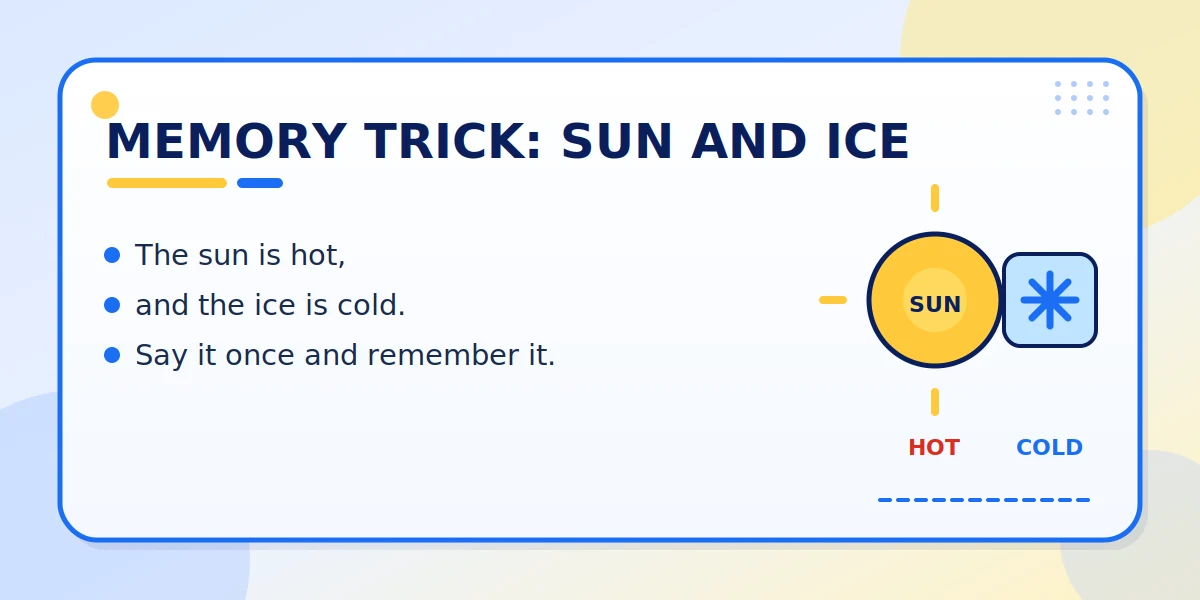
Think of the sun for hot and ice for cold. Hot is a high temperature, like the sun. Cold is a low temperature, like ice. Use this sentence to remember: “The sun is hot, and the ice is cold.” This trick helps you remember the difference between hot and cold. Explore related comparisons in our guides to high or low, good or bad, and black or white.
Practice Questions
Test your understanding of hot and cold with these questions. Choose the correct word for each sentence.
- The soup is very _____. It is steaming.
- The weather is _____ today. It is snowing.
- The tea is _____. It is not hot, but not cold either.
- He gave me a _____ reply. He did not seem interested.
- You are getting _____. You are close to the hidden object.
- The wind is _____. It makes me shiver.
- The new song is _____. Everyone loves it.
- The water is _____. It feels like ice.
- You are getting _____. You are moving away from the object.
- The curry is very _____. It is spicy.
Answer Key
- Hot
- Cold
- Warm
- Cold
- Warmer
- Cold
- Hot
- Cold
- Colder
- Hot
Frequently Asked Questions
What is the difference between hot and cold?
Hot describes something with a relatively high temperature, while cold describes something with a relatively low temperature. They are opposite adjectives, but warm, lukewarm, and cool describe temperatures between them.
Is warm the opposite of cold?
No. Warm is not the opposite of cold. Warm sits between hot and cold on the temperature scale. It describes a temperature higher than cool but lower than hot, like a warm drink on a cool day.
What does it mean to blow hot and cold?
To blow hot and cold means to change your opinion, feelings, or support often. It describes a person who is sometimes enthusiastic and sometimes uninterested or negative. That kind of inconsistency can confuse other people.
What is the difference between a hot wallet and a cold wallet?
In cryptocurrency, a hot wallet connects to the internet, while a cold wallet keeps its keys offline. In programming, hot and cold streams describe different ways data is produced and shared.
How do you play the hot and cold game?
One player hides a small object while the others close their eyes. Then everyone searches for it. The hider says hot when you are close and cold when you are far. Warmer means closer, and colder means farther away.
What does hot and cold mean in a game?
In this game, hot means you are close to the hidden object, while cold means you are far from it. Warmer means you are getting closer, and colder means you are moving away.
Keep Learning
If you liked this guide to hot or cold, explore more comparisons in our Vocabulary guides. Check out our guides to yes or no, true or false, left or right, more or less, one or two, rain or shine, and red or blue. These guides help you learn English words and phrases.