Left or Right: Meanings, Differences, and Easy Ways to Remember Them
Quick Answer
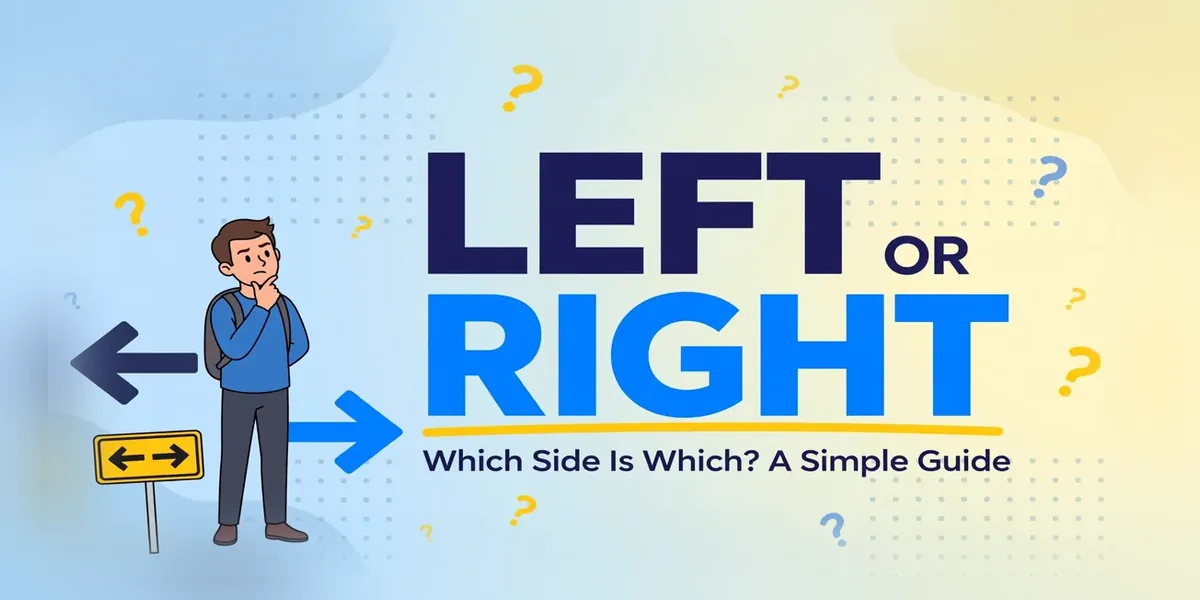
Left and right are opposite directions. Your left is the side of your left hand. Your right is the side of your right hand. The side changes when you turn your body. It also changes when you face another person. Left can also mean something that remains. It is also the past tense of leave. Right can also mean correct, suitable, or a legal entitlement. If you ask left or right, first check the context. The words can mean direction, a choice, or something else entirely.
Table of Contents
- What Does Left or Right Mean?
- What Does Left Mean?
- What Does Right Mean?
- Left vs Right: Comparison Table
- How to Tell Left From Right
- Driving and Directions in the USA
- Common Idioms and Expressions
- Left or Right in Politics
- Are People Left-Brained or Right-Brained?
- Common Mistakes
- Easy Memory Trick
- Practice Questions
- Frequently Asked Questions
- Related Guides
What Does Left or Right Mean?
Left and right are opposite directions, but their meanings go beyond physical sides. They help us follow directions, describe body parts, and understand everyday expressions. When someone asks left or right, they often ask you to choose a side or a turn. In other cases, the phrase is part of an idiom. Context tells you which meaning fits.
Many people mix them up in daily life. Stress, hurry, and distraction can make the choice harder. A clear method can reduce the confusion. This guide explains the meanings, gives examples, and shares easy memory tricks.
What Does Left Mean?
Left is the opposite side of right. It is the side of your left hand, your left foot, and your left ear. You can also use it to describe a remaining amount.
Examples: Turn left at the corner. The shop is on the left. We have two slices left. She left the office at five.
In the last example, left is the past tense of leave. The meaning depends on the sentence. In the third example, left means something remains. Check the verb and the rest of the sentence before you decide.
What Does Right Mean?
Right is the opposite side of left. It is the side of your right hand, your right foot, and your right ear. It can also mean correct or suitable.
Examples: Turn right at the light. Your answer is right. This is the right time to call. Everyone has the right to vote.
Right can also mean a moral or legal entitlement. The context tells you which meaning fits. Right can also be a verb. To right a wrong means to correct it. To right a boat means to set it upright again. In phrases like right away, right now, and right next to, right means directly or immediately. It does not mean the right side in those phrases.
Left vs Right: Comparison Table
| Feature | Left | Right |
|---|---|---|
| Direction | Opposite of right | Opposite of left |
| Body side | Left hand, foot, and ear | Right hand, foot, and ear |
| Turn | Turn left | Turn right |
| Other meaning | Remaining; past tense of leave | Correct; suitable |
| Noun use | Left side | Legal or moral entitlement |
| Politics | Often linked to liberal views | Often linked to conservative views |
The words left and right also work as nouns. You can say, “Take the left.” You can also say, “Take the right.” The words can act as adjectives too. You can say, “left lane” or “right side.” When you compare left or right in a table, keep the direction meaning separate from the other meanings. That separation stops most confusion.
How to Tell Left From Right
Use the L-Hand Trick
Hold both hands in front of you. Point your index fingers up. Stretch your thumbs out. Your left hand forms the letter L. Your right hand forms a backward L. Use this trick when you need a quick check. It works best if you know the letter L. It does not work well while you drive. Keep both hands on the wheel when you drive.
Use Your Writing Hand
Think about the hand you use to write. If you write with your right hand, that side is right. If you write with your left hand, that side is left. This method works fast for many people. If you write with both hands, pick one anchor hand and use it each time. Consistency matters more than the hand you pick.
Use a Watch or Bracelet
Wear a watch or bracelet on one wrist each day. Use it as a steady anchor. Glance at it when you feel unsure. A ring can work the same way. A hair tie on one wrist can also help. Feel for the anchor instead of looking for it. That habit helps in class, in dance, and in sport.
Use the Facing-Person Mirror Rule
A person who faces you has a reversed view. Your left is that person’s right. Your right is that person’s left. Picture a mirror image. This rule helps when you give directions face to face. It also helps when you follow a teacher who faces the class. If you forget the rule, turn to face the same way as the other person. Then your left and right will match.
Practice With Everyday Activities
Point left and right during a walk. Follow spoken directions in a game of Simon Says. Try the Hokey Pokey with a child. Name the hand and foot you move each time. Short daily practice builds speed. Pick one method and use it each day until it feels automatic.
Driving and Directions in the USA
In the USA, drivers use right-hand traffic. Cars travel on the right side of the road. The driver sits on the left side of most cars. The passenger sits on the right side. When you ask left or right in a car, the driver side means left. The passenger side means right.
A left turn means you turn toward the driver’s side. A right turn means you turn toward the passenger’s side. A left lane is often used for passing on a highway. A right lane is often used for slower traffic.
You can turn right on red in many places after a full stop. Rules vary by state and local area. Some signs ban the turn. You must check the sign before you turn. Left turns on red are rare. They may apply only in limited one-way cases. Rules vary by state. Always follow local signs and laws.
When a passenger gives a quick direction, say it aloud before you turn. Use a navigation voice when you can. Do not take your hands off the wheel to check the L trick. If you miss a turn, stay calm and let the navigation reroute you.
Common Idioms and Expressions
Left and right appear in many phrases. In these phrases, the words do not always mean direction. Learn the phrase as a whole. That habit stops literal reading errors.
Left and Right
This phrase means everywhere or from all sides. Example: Orders came in left and right.
Left, Right, and Center
This phrase also means everywhere, or in large amounts. Example: The team received complaints left, right, and center.
Two Left Feet
This phrase means a person is clumsy when dancing. The origin of this phrase is disputed. Do not treat one origin story as settled fact. Example: I have two left feet at weddings.
Left-Handed Compliment
This phrase means a compliment that also insults. It sounds kind at first. It hides a negative point. Example: “You look nice today” can sound like a left-handed compliment in some contexts.
Out of Left Field
This phrase means something unexpected or surprising. Its origin is disputed. It may come from baseball, but sources do not agree on one story. Example: His question came out of left field.
Out in Left Field
This phrase means strange or out of touch. It differs from out of left field. One means surprising. The other means off the mark. Example: That plan sounds out in left field.
Left Behind
This phrase means not taken along, or left in a place. Example: He left his bag behind at school.
Left a Lot to Be Desired
This phrase means disappointing, or falling short of what was hoped for. Example: The food left a lot to be desired.
Right-Hand Man
This phrase means a trusted helper or deputy. Example: She is the manager’s right-hand man.
The Right Stuff
This phrase means the qualities needed for success in a hard task. Example: She has the right stuff for this job.
Right Away
This phrase means at once or without delay. It is not a direction. Example: Call me right away.
Right Now
This phrase means at this moment. Example: I cannot talk right now.
Right Next To
This phrase means directly beside something or someone. Example: The pharmacy is right next to the grocery store.
The Left Hand Does Not Know What the Right Hand Is Doing
This phrase means poor coordination inside a group. One part does not know what another part does. Example: The two teams did not share plans, so the left hand did not know what the right hand was doing.
Left or Right in Politics
In politics, left and right describe broad views. The terms come from the seating of the French National Assembly in 1789. Supporters of change sat on the left. Supporters of tradition sat on the right. Dictionary.com notes this origin.
Today, left often links to liberal or progressive views. Right often links to conservative views. These labels are broad. They do not describe every person in a group. A person can hold a left view on one issue and a right view on another. Use them with care in political talk. Do not mix the political meaning with the direction meaning. Context tells you which one fits.
Are People Left-Brained or Right-Brained?
The idea of left-brained and right-brained people is popular. It says left-brained people are logical. It says right-brained people are creative. Brain science does not support this simple split.
Some brain tasks show a side bias. Language tasks often use the left side more. Spatial tasks often use the right side more. Both sides work together in most tasks. The corpus callosum links the two sides.
A 2013 study from the University of Utah tested 1,011 people. It found no clear left-dominant or right-dominant groups. Science News Explores also reports this finding. People use whole-brain networks for most tasks. A quiz that labels you left-brained or right-brained is a game, not a diagnosis. You are whole-brained. Logic and creativity both use networks across both sides.
Common Mistakes
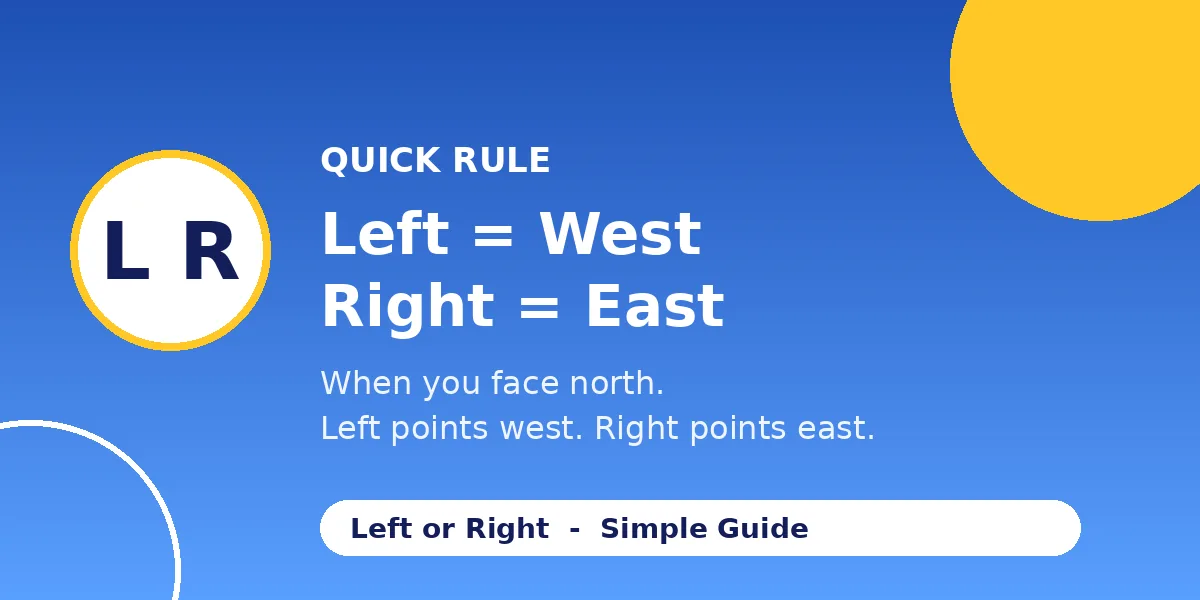
Do not assume left means west. Left depends on the direction you face. If you face south, left points east. If you face north, left points west. If you face east, left points north.
Do not use right only for direction. Right can mean correct. It can mean suitable. It can mean a legal right. It can also mean directly, as in right away.
Do not mix up out of left field and out in left field. One means surprising. The other means strange or out of touch.
Do not treat left-brained and right-brained labels as facts. They are myths based on a simplified view of brain science.
Do not assume your left is another person’s left when you face them. Face to face, the sides reverse. Check the mirror rule before you give a direction.
Easy Memory Trick
Use the L-W-A-M method. This is an article memory aid, not a scientific method.
- L: Look for the L shape with your left hand.
- W: Recall your writing hand.
- A: Use an anchor like a watch.
- M: Mirror the other person when you face them.
Say the steps aloud once. Repeat them when you feel unsure. The steps take only a few seconds. Pick one step as your main check. Use the other steps when you need a second check.
Practice Questions
- You face north. Which side is west?
- You face south. Which side is east?
- A person faces you and points left. Which side is that for you?
- What does left mean in “We have two tickets left”?
- What does right mean in “Your answer is right”?
- What does right away mean?
- What does two left feet mean?
- What does out of left field mean?
- What does out in left field mean?
- What does right-hand man mean?
Answer Key
- Left. When you face north, west is on your left side.
- Left. When you face south, east is on your left side.
- Right. When someone faces you, their left is your right.
- Two tickets remain. Left here means something that is still there.
- Your answer is correct. Right here means correct, not direction.
- At once, without delay. Right away is not a direction.
- Clumsy when dancing. Two left feet describes a clumsy dancer.
- Unexpected or surprising. Out of left field means it came from nowhere.
- Strange or out of touch. Out in left field is more critical than out of left field.
- A trusted helper or deputy. A right-hand man is a close, trusted assistant.
Frequently Asked Questions
1. What is the difference between left and right?
Left and right are opposite directions based on your body. Your left matches your left hand. Your right matches your right hand. The sides change when you turn. They also reverse when you face another person.
2. How can I remember which side is left and which is right?
Use the L-hand trick. Hold both hands up with thumbs out. The left hand forms an L. You can also use your writing hand. A watch or bracelet can serve as a steady anchor.
3. Why do I mix up left and right?
Stress, hurry, and distraction can make the choice harder. Lack of daily practice can also play a role. A simple trick can help. Repeat the trick until it feels automatic.
4. What does left or right mean in directions?
In directions, left means turn toward your left side. Right means turn toward your right side. Navigation apps use the same rule. The rule stays the same when you face the road ahead.
5. What does left or right mean in politics?
In politics, left often links to liberal or progressive views. Right often links to conservative views. The terms come from French Assembly seating in 1789. They are broad labels, not exact descriptions of all people.
6. Are people left-brained or right-brained?
No, people are not simply left-brained or right-brained. A 2013 University of Utah study found no clear dominance groups. Both sides of the brain work together. Creativity and logic use whole-brain networks.
7. What does left and right mean in everyday speech?
In everyday speech, left and right can mean everywhere. People say, “Calls came in left and right.” The phrase means from all sides. Context tells you if the words mean direction or something else.
Final Takeaway
Left and right start as simple directions. Your left matches your left hand. Your right matches your right hand. Turn, and the sides turn with you. Face someone, and the sides reverse. Learn the L trick, your writing hand, and one anchor. Then the choice becomes fast and calm. When the words show up in idioms, politics, or brain talk, check the context first. That habit will keep the two sides clear in almost every sentence you meet.